【レートチェックか】日銀で円安からの急落!今後の展開を話します【ドル円・為替介入】
【レートチェックか】日銀で円安からの急落!今後の展開を話します【ドル円・為替介入】 - Summary Notes
Summary:
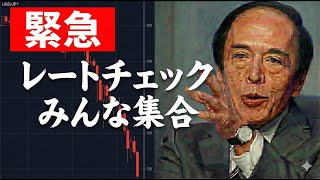
This video by FX初心者ch discusses the recent sharp drop in the Dollar-Yen (USD/JPY) exchange rate following an observation of a "rate check" by the Bank of Japan (BoJ). The video explains what a rate check is, its relationship to currency intervention, analyzes the current market conditions, and provides insights into future trading strategies, especially in light of the ongoing yen weakness. The speaker believes that immediate intervention is unlikely to be effective.
Key Takeaways:
* **Rate Check is the final step before a currency intervention.**
* **The speaker believes that a currency intervention is unlikely to be effective at this time.**
* **For effective intervention, there needs to be a buildup of long USD/JPY positions (or short yen positions).**
* **Current IMM data shows a relatively small amount of short yen positions.**
* **The speaker views the BoJ/Ministry of Finance's (MoF) actions as potentially counterproductive, possibly driven by a desire to prevent USD/JPY from reaching 160.**
* **Continued Yen weakness is expected.**
* **Traders should be aware of the difference between whether to buy on the dip or wait for actual intervention when trading.**
Detailed Notes:
**I. Introduction (0:00:00 - 0:00:29)**
* The video is about the recent sudden drop in USD/JPY due to a suspected BoJ "rate check".
* The speaker is recording this video urgently because of the event.
* USD/JPY experienced a long-tailed candlestick today.
* The initial rise was due to the BoJ Governor Ueda’s remarks, but was followed by a sharp decline upon the rate check observation.
**II. What is a Rate Check? (0:00:29 - 0:01:05)**
* Rate check is the final preparation for currency intervention.
* The BoJ calls private banks to check their current trading rates, specifically for USD/JPY (but can be other pairs).
* It's a step above "verbal intervention" but below actual currency intervention.
* The order of events is: verbal intervention -> rate check -> currency intervention.
**III. Timeframe Between Rate Check and Intervention (0:01:05 - 0:01:57)**
* The video reviews past instances of rate checks and subsequent interventions to see the time between them.
* **Example 1: Sept 14, 2022 (rate check) -> Sept 22, 2022 (intervention)** - roughly 1 week.
* **Example 2: July 12, 2024 (rate check & intervention)** - intervention was done the day of or the day before.
* Therefore, the time between a rate check and actual intervention can vary (from immediately to about a week).
**IV. Current Analysis and Likely Outcome (0:01:57 - 0:03:07)**
* The speaker believes that an immediate currency intervention is unlikely.
* The most effective time for currency intervention is when there is a significant buildup of long USD/JPY positions.
* Intervention in the current scenario (with fewer long positions) would be less effective.
**V. Why Intervention Needs Long Positions to be Effective (0:03:07 - 0:03:39)**
* If intervention occurs when there are a lot of long positions (people are buying USD/JPY), then the intervention causes those people to have a loss and make them want to close the position.
* The reason why it works is that those that have a loss sell and close their position. This causes downward pressure on USD/JPY.
* If intervention occurs and there are a lot of short positions, those that have short positions make profit, close, and buy back USD/JPY. This causes upward pressure on USD/JPY.
* Therefore, intervention when the market is short doesn't work, and may even cause upward pressure.
**VI. Analyzing IMM Data to Determine Effectiveness of Intervention (0:03:39 - 0:04:47)**
* To determine the effectiveness of a future intervention, the speaker discusses how to look at the IMM (Commitments of Traders) data.
* The black bar graph that goes down means there are more Yen selling positions compared to foreign currency positions.
* The black bar graph that goes up means there are more Yen buying positions compared to foreign currency positions.
* The speaker shows current data of the Yen position, and explains that the Yen is still in a short position but the degree to which it is short is relatively small, so it's not a good time for intervention.
* The speaker states that a past intervention, in July 2024, occurred when the Yen was more short.
**VII. Why the MoF Actions May Be Premature (0:04:47 - 0:06:55)**
* The speaker again reiterates that effective intervention is difficult, given the current market structure.
* The recent MoF/BoJ actions, including strong verbal interventions and rate checks, are premature.
* The speaker believes that the MoF/BoJ seems to be more concerned with the exchange rate and wants to stop the rise in the USD/JPY.
* The MoF may have used some stronger words and may have brought up these actions prematurely.
**VIII. Potential Negative Consequences of Current Strategy (0:06:55 - 0:09:59)**
* The current approach could force an intervention, which is likely to be ineffective.
* The interventions can become a "time waster."
* If the intervention occurs, and the price just goes up, it becomes a signal to the hedge funds, causing them to make more money.
* The speaker believes the current rate check is not good.
* The interventions may be in a situation where they have to intervene and the price just goes up.
* This is the worst-case scenario.
**IX. Current Strategy (0:09:59 - 0:11:06)**
* The current situation may be one where the MoF has trapped themselves into having to intervene.
* The speaker believes the MoF should wait for the long USD/JPY (short Yen) positions to build up.
* For those already holding USD/JPY long positions, the current drop is not a cause to panic.
* The speaker also has a EUR/JPY long position.
**X. Future Strategy (0:11:06 - 0:11:58)**
* For those who have not yet entered the USD/JPY market, now is not the time to buy.
* This also applies to not buying on the dip because it is unknown if a real intervention is coming.
* The speaker anticipates continued Yen weakness.
* The speaker will be talking about what is the next step for them.
* The speaker also offers membership.
**XI. Conclusion (0:11:58 - 0:12:43)**
* The video concludes with a reminder that the Yen weakness is expected to continue.
* The speaker emphasizes the importance of understanding how to navigate currency intervention.
* The speaker encourages viewers to like the video and subscribe to the channel.
Related Summaries
![[캡컷PC]0015-복합클립만들기분리된영상 하나로 만들기](https://img.youtube.com/vi/qtUfil0xjCs/mqdefault.jpg)

Why this video matters
This video provides valuable insights into the topic. Our AI summary attempts to capture the core message, but for the full nuance and context, we highly recommend watching the original video from the creator.
Disclaimer: This content is an AI-generated summary of a public YouTube video. The views and opinions expressed in the original video belong to the content creator. YouTube Note is not affiliated with the video creator or YouTube.