29) AYT Biyoloji - Fotosentez 1 - Zeliha YÜCEL - 2026
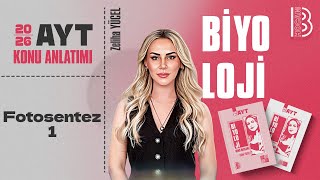
29) AYT Biyoloji - Fotosentez 1 - Zeliha YÜCEL - 2026: Notes
1. Summary
This video introduces the topic of photosynthesis in the context of AYT biology, focusing on the energy transformations within living organisms. The instructor, Zeliha Yücel, emphasizes the importance of understanding energy conversions, starting with the sun's photons and their role in the production of organic compounds through photosynthesis and ultimately the use of that energy by consumers. The video covers the basics of ATP, its role in energy transfer, and the different types of phosphorylation, setting the stage for a deeper dive into the mechanisms of photosynthesis in the subsequent video. The video also highlights key concepts of energy transformations, the structure of ATP, and the role of pigments, particularly chlorophyll, in capturing light energy.
2. Key Takeaways
* **Photosynthesis & Cellular Respiration:** The core theme is the transformation and conversion of energy, primarily light energy into chemical bond energy in organic molecules by producers. Followed by the breakdown of the bond energy and transformation into ATP for biological use.
* **ATP as Energy Currency:** ATP (Adenosine Triphosphate) is the primary energy carrier in cells. It is used to start chemical reactions in the cells.
* **Energy Transformations:** The video emphasizes understanding how energy flows from sunlight to organic compounds (photosynthesis) and then to usable energy forms like ATP (cellular respiration).
* **Prokaryotes vs. Eukaryotes:** Photosynthesis can occur in prokaryotes (in the cytoplasm) as well as eukaryotes (in chloroplasts in plant cells).
* **Different Ways to Say Things**: Don't focus on memorizing phrases and terms. Instead, focus on understanding the underlying concepts.
* **Key Concepts:**
* **Endergonic vs. Exergonic Reactions:** Understanding that phosphorylation (ATP synthesis) is endergonic (requires energy) and dephosphorylation (ATP breakdown) is exergonic (releases energy).
* **Three types of phosphorylation**: Substrate-level, Oxidative and Photo.
* **Photosynthesis is a structure of different components**. Including carbon which is a key component for producing energy.
* **Angelmann’s Experiment**: Highlights the different color absorption rates that support photosynthesis.
* **Klorofil/Kloroplast**: Kloroplast is a complex structure of different elements, the central klorofil pigment is the most crucial for absorbing the required energy.
3. Detailed Notes
**I. Introduction (0:00:00 - 0:00:12)**
* Introduction to the new AYT biology unit: "Energy Conversions in Living Organisms."
* First topic: Photosynthesis 1.
**II. Overview of the Unit (0:00:12 - 0:00:41)**
* The unit will cover photosynthesis, chemosynthesis, cellular respiration, and fermentation.
* Emphasis on the interconnectedness of these processes in energy transformation.
**III. Importance of the Unit (0:00:41 - 0:01:21)**
* The instructor's favorite unit, stressing the planetary and cellular connections of photosynthesis.
* Emphasis on understanding the underlying concepts rather than rote memorization.
**IV. What the Unit Covers (0:01:21 - 0:01:50)**
* Focus on energy conversion: how producers (like plants) convert light energy into chemical energy (photosynthesis), and how this energy is then used by consumers.
* The roles of photosynthesis and cellular respiration in this process.
**V. Energy Source and Forms (0:01:50 - 0:02:27)**
* Energy conversion parallels the transformation of currency.
* ATP as the main energy source for the unit.
* Emphasis on the concept of energy not being created or destroyed, but transformed.
**VI. Unit Structure (0:02:27 - 0:02:43)**
* The unit will cover Photosynthesis 1 and 2, chemosynthesis, and cellular respiration.
**VII. Introduction to Key Concepts (0:02:43 - 0:03:00)**
* Emphasis on active listening and avoiding distractions.
**VIII. Energy Transformations in Biological Systems (0:03:00 - 0:03:38)**
* Cells require energy for metabolic activities.
* Sun as the primary energy source for life on Earth.
* Photosynthesis and cellular respiration as key energy conversion processes.
**IX. Location of Energy Conversions (0:03:38 - 0:04:11)**
* Prokaryotes: Photosynthesis occurs in the cytoplasm.
* Eukaryotes: Photosynthesis occurs in the chloroplasts.
* Cellular Respiration: Cytoplasm and Mitocondria
**X. Energy Conversion Details: Photosynthesis and Respiration (0:04:11 - 0:04:59)**
* "Kulağı tersten tutma" approach: understanding concepts in various forms.
* Photosynthesis: Conversion of light energy to chemical bond energy in organic molecules.
* Chemical bond energy is in carbs, fats, and proteins.
* Respiration: Breaking down organic molecules through a metabolic process.
**XI. ATP: The Energy Carrier (0:05:59 - 0:06:15)**
* Chemical bond energy is stored in ATP for cellular use.
* ATP: Not an energy molecule, but releases energy by breaking bonds.
**XII. Metabolic Events (0:06:15 - 0:07:11)**
* Chemical bond energy in organic molecules is converted to ATP.
* ATP provides energy for cellular functions.
* Energy transformation analogy: like currency conversion, energy conversion occurs as needed.
**XIII. Photosynthesis and Cellular Respiration - Detailed (0:07:11 - 0:07:57)**
* The unit's core focus: Photosynthesis and cellular respiration.
* Energy is constantly transformed.
**XIV. Metabolism Review - Anabolism vs. Catabolism (0:07:57 - 0:08:41)**
* Review of metabolic processes:
* **Metabolism**: All building up and breaking down events.
* **Anabolism (building)**: Photosynthesis, chemosynthesis, and protein synthesis.
* **Catabolism (breaking down)**: Cellular respiration (aerobic and anaerobic), fermentation, and hydrolysis.
**XV. Connecting Anabolism/Catabolism and Photosynthesis/Respiration (0:08:41 - 0:09:03)**
* Understanding how anabolism requires energy and how photosynthesis and cellular respiration fit in.
**XVI. ATP (Adenosine Triphosphate) Overview (0:09:03 - 0:09:38)**
* ATP as the key to energy.
* What is ATP?
* Adenosine Triphosphate (ATP)
* Adenin Azotlu Organik Baz
* 5 Carbonlu Riboz
* 3 Fosforik Asit Grubu
**XVII. The ATP Molecule (0:09:38 - 0:10:04)**
* Structure of ATP: Adenine, Ribose, and 3 phosphate groups.
* Importance of knowing the structure and the bonds within.
**XVIII. The Role of ATP in Chemical Reactions (0:10:04 - 0:10:46)**
* ATP as a crucial molecule for energy.
* Chemical reactions start with activation energy and enzymes help lower that threshold.
**XIX. ATP Structure (Detailed Breakdown) (0:10:46 - 0:11:23)**
* ATP components:
* Adenine: An organic nitrogenous base (similar in DNA and RNA).
* Ribose: 5-carbon sugar (similar in RNA and ATP).
* 3 Phosphate Groups: The "tri" in "triphosphate."
**XX. ATP as an Energy Molecule and its Role (0:11:23 - 0:12:09)**
* ATP: A molecule that provides the energy for chemical reactions.
* ATP is not just an energy molecule, it is what starts the reactions.
* The high-energy phosphate bonds.
**XXI. ATP Production and Consumption in Cells (0:12:09 - 0:12:45)**
* ATP synthesis and breakdown: within the cell.
* Cells produce and use ATP locally, (not shared between cells).
* ATP is not stored.
**XXII. ATP Synthesis and Hydrolysis (0:12:45 - 0:13:34)**
* ATP's Production and Consumption: Sentez (Phosphorylation) and Yıkım (Defosforilasyon)
* Sentez = Phosphorylation, Yıkım = Dephosphorilasyon
* Sentez and Yıkım are opposite and have an effect on the energy of the cells.
**XXIII. Important points regarding ATP (0:13:34 - 0:14:19)**
* ATP synthesis: adding a phosphate group (phosphorylation).
* ATP is also involved in other biological and/or chemical events.
* Adenin, Riboz ve Fosforik Asit Grubu.
**XXIV. ATP Synthesis and Breakdown (0:14:19 - 0:15:16)**
* Ester bağları are formed between the sugar and phosphate.
* Glikozit bağları are formed between the adenin base and the sugar.
* These bonds and these groups can be asked on the exam.
**XXV. Formation and Breakdown (0:15:16 - 0:17:45)**
* AMP, ADP, ATP steps.
**XXVI. Phosphorylation and Dephosphorylation (0:16:18 - 0:18:02)**
* Phosphorylation: Adding phosphate (energy) to a molecule.
* ADP + Pi -> ATP (endergonic - requires energy).
* Dephosphorylation: Removing a phosphate (releasing energy).
* ATP -> ADP + Pi (exergonic - releases energy).
**XXVII. Endergonic and Exergonic Reactions (0:18:02 - 0:19:25)**
* Understanding endergonic and exergonic reactions.
* Fosforilasyon -> endergonic.
* Dephosphorilasyon -> exergonic.
**XXVIII. Relationship of ATP and metabolic activity (0:19:25 - 0:21:05)**
* Anabolic reactions (building) require energy.
* Catabolic reactions (breaking down) release energy.
* ATP in different events (enzymatic and non-enzymatic).
**XXIX. Hydrolisis and Pasif Taşımada (0:21:05 - 0:22:01)**
* Hydrolysis is water based
* Pasif Taşımada is not.
* Only a few metabolik olay doesn't use ATP.
**XXX. Three Types of Phosphorylation (0:22:33 - 0:22:49)**
* Substrat Düzeyinde
* Oksidatif
* Fotofosforilasyon
**XXXI. Substrat Düzeyinde Fosforilasyon (SDF) (0:22:57 - 0:23:21)**
* Uses enzymes to transfer phosphate from a substrate to ADP, generating ATP.
* Occurs in all living organisms in the cytoplasm.
**XXXII. Oksidatif Fosforilasyon (0:23:40 - 0:23:58)**
* Involves the Electron Transport System (ETS).
**XXXIII. Fotofosforilasyon (0:24:00 - 0:24:07)**
* ATP generated from light energy (occurs in photosynthesis).
**XXXIV. Summary of Phosphorylation Types (0:24:07 - 0:25:07)**
* SDF, Oxidative, and Photo
* Photo - occurs when creating ATP with light energy.
**XXXV. Question Practice - ATP Structure (0:25:07 - 0:26:48)**
* Practice question on ATP structure, highlighting correct answers.
**XXXVI. Photosynthesis Overview (0:26:56 - 0:27:20)**
* Now moving on to Photosynthesis.
* Understanding what photosynthesis is.
* In this section we will explore the main elements.
* And in the next video we will explore the actual reactions.
**XXXVII. What is Photosynthesis (0:27:20 - 0:28:03)**
* Process of converting light energy into chemical energy (inorganic to organic).
* Klorofil's role is essential.
**XXXVIII. Photosynthesis in Prokaryotes (0:28:03 - 0:28:16)**
* Prokaryotes' photosynthesis processes
**XXXIX. Photosynthesis in Prokaryotes (0:28:16 - 0:28:35)**
* Photosynthesis and its impact on the cells.
* Prokaryotes in general have limitations.
**XL. Photosynthesis: Light and Carbon Source (0:28:35 - 0:28:54)**
* The autotroph definition.
* Understanding the production and use of organic carbon.
**XLI. What are the basic elements of a fotosentez (0:28:54 - 0:30:31)**
* Important aspect of this section is to learn what are the key elements of the event and how they effect it.
**XLII. The Photosynthesis Reaction and Terminology (0:30:31 - 0:30:54)**
* Emphasizing the importance of key terms like "karbondioksit özümlemesi."
**XLIII. Photosynthesis: Detailed Equation (0:30:54 - 0:32:04)**
* Focus on the carbon source (carbondioksit).
* Emphasis on how the source (water and carbon) relates to the atmospheric and chemical outcomes of the reaction.
**XLIV. Key Points: Reactants and Products (0:32:04 - 0:32:34)**
* The source of the oxygen in the reaction is water.
* What if you change the amount of Oxygen in the cell?
**XLV. Key Points to Note (0:32:34 - 0:34:49)**
* Carbon, Hydrogen, and Oksijen are the essential part for understanding the reaction.
**XLVI. Photosynthesis (0:34:49 - 0:35:05)**
* Key components and their placement in the reaction.
* Photosynthesis equation, comparing it to the simplified version.
**XLVII. Analyzing the Photosynthesis Equation (0:35:05 - 0:36:00)**
* Detailing where each atom goes: Carbon from CO2 into glucose, hydrogen from water into glucose, and oxygen from water into oxygen.
**XLVIII. Simplified Equation (0:36:00 - 0:37:08)**
* Where all of these elements are located in the simplified equation.
* Carbon is in the besin part.
**XLIX. Analyzing the Simplified Equation (0:37:08 - 0:37:59)**
* How the reaction changes and how to understand it.
**L. Photosynthesis: Reagents and Products (0:37:59 - 0:38:09)**
* The components of the photosynthesis reaction: CO2 and Water.
**LI. The Water to Oxygen Process (0:38:09 - 0:38:27)**
* Emphasis on the origin of the oxygen in the reaction.
* The link between the water and oksijen.
**LII. Understanding the Equation (0:38:27 - 0:39:02)**
* Water + O2 relationship explained.
**LIII. Key Details and the Goal (0:39:02 - 0:39:58)**
* Focus on understanding the components.
* Overview of how to perform and visualize the components.
**LIV. The importance of Kloroplast (0:39:58 - 0:40:15)**
* Emphasis on the cell structure, focusing on kloroplast.
**LV. Kloroplast’s structure (0:40:15 - 0:41:16)**
* Structure, 3rd zar system, and pigments.
* Kloroplast's structure: Double Membrane, Thylakoid membranes, Grana/Granum, Stroma.
* Klorofil's important functions.
**LVI. Klorofil’s functions (0:41:16 - 0:42:04)**
* Klorofil and the use of light.
**LVII. What is Klorofil (0:42:04 - 0:42:47)**
* How klorofil reacts.
* Photosynthesis, is about the reaction with the pigment and light.
**LVIII. The next step: (0:42:47 - 0:44:52)**
* The different aspects of photosentez are presented.
**LIX. Karatoneitlers (0:44:52 - 0:45:08)**
* What are the main components
* What is the benefit of it?
**LX. The Angelmann’s deneyi (0:45:57 - 0:46:29)**
* What's the point of the test?
* What do the results mean?
* What are the results?
**LXI. What is Klorofilin (0:46:29 - 0:48:13)**
* Klorofil's main functions.
* Kloroplast is the most important aspect of photosentez.
**LXII. Other pigments (0:48:13 - 0:48:58)**
* A lot of other pigments are involved in the process.
**LXIII. Klorofil’s function (0:48:58 - 0:50:11)**
* Klorofil pigments and it's functions are the key elements.
**LXIV. The End (0:50:11 - 0:50:59)**
* Now that all the previous elements are explained.
* You are ready for the next class.
* Make sure you understand the videos before moving on.
Related Summaries
![[캡컷PC]0015-복합클립만들기분리된영상 하나로 만들기](https://img.youtube.com/vi/qtUfil0xjCs/mqdefault.jpg)
Why this video matters
This video provides valuable insights into the topic. Our AI summary attempts to capture the core message, but for the full nuance and context, we highly recommend watching the original video from the creator.
Disclaimer: This content is an AI-generated summary of a public YouTube video. The views and opinions expressed in the original video belong to the content creator. YouTube Note is not affiliated with the video creator or YouTube.