7. IMMOBILIZER 1 (CERVICAL COLLAR, HEAD IMMOBILIZER & SPINAL BOARD) - TRAUMA LIFE SUPPORT MALAYSIA
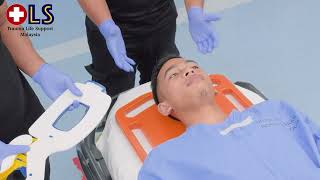
Notes: 7. IMMOBILIZER 1 (CERVICAL COLLAR, HEAD IMMOBILIZER & SPINAL BOARD) - TRAUMA LIFE SUPPORT MALAYSIA
**Channel:** Malaysian Society for Care of Trauma (MASCOT)
**Video Title:** 7. IMMOBILIZER 1 (CERVICAL COLLAR, HEAD IMMOBILIZER & SPINAL BOARD) - TRAUMA LIFE SUPPORT MALAYSIA
**Description:** This video demonstrates the method for cervical collar, head immobilizer and spinal board application.
---
1. Summary
This video from MASCOT demonstrates the correct procedure for applying essential spinal immobilization devices in trauma situations. It covers the step-by-step application of a cervical collar, head immobilizers, and the transfer of a patient onto a spinal board. The primary goal is to maintain neutral spinal alignment and prevent further injury during extrication and transport. Key principles emphasized include the importance of manual in-line stabilization, proper device sizing, and coordinated team efforts.
---
2. Key Takeaways
* **Maintain Neutral Spinal Alignment:** The paramount goal is to keep the patient's spine in a straight, neutral position throughout the immobilization process.
* **Manual In-line Stabilization (MIS):** A rescuer must provide continuous MIS from the moment of patient contact until immobilization is complete.
* **Teamwork is Crucial:** Effective spinal immobilization requires coordinated effort from multiple rescuers.
* **Proper Sizing is Essential:** Correctly sized cervical collars and head immobilizers are vital for effective stabilization and patient comfort.
* **Minimizing Movement:** The entire process should aim to minimize any movement of the patient's head, neck, and spine.
* **Sequential Application:** The video demonstrates a logical sequence: MIS, cervical collar, head immobilizers, and then board application.
* **Board as a Movement Device:** The spinal board is primarily used to move the immobilized patient, not as a primary stabilization device on its own.
---
3. Detailed Notes
#### **I. Introduction & Purpose of Spinal Immobilization**
* **Objective:** To prevent further injury to the spinal cord in patients with suspected spinal trauma.
* **Mechanism of Injury (MOI) Considerations:** High-risk MOIs often necessitate spinal immobilization (e.g., falls from height, motor vehicle collisions, penetrating trauma to the torso).
* **Key Principle:** Maintain neutral spinal alignment at all times.
#### **II. Manual In-line Stabilization (MIS)**
* **Initiation:** One rescuer applies MIS immediately upon assessing the patient.
* **Technique:**
* Hands are placed on either side of the patient's head/neck, at the occiput and mastoid processes.
* Gentle, firm pressure is applied to prevent any movement.
* Rescuer's body acts as a splint.
* **Duration:** MIS is maintained until all immobilization devices are secured.
#### **III. Cervical Collar Application**
* **Purpose:** To limit cervical spine movement.
* **Sizing:**
* Crucial to select the correct size to prevent hyperextension or hyperflexion.
* Measure from the base of the neck (below the mandible) to the anterior part of the shoulder.
* Fit should be snug but allow for breathing.
* **Application Process:**
* One rescuer maintains MIS.
* The second rescuer applies the collar.
* The collar is slipped behind the neck, with the chin support resting under the chin and the occipital support at the back of the head.
* Fasten the Velcro straps securely, ensuring no pinching of skin.
* Check for any obstruction to breathing.
#### **IV. Head Immobilizer Application**
* **Purpose:** To further restrict lateral (side-to-side) and rotational movement of the head and neck.
* **Types:** Often soft, foam-filled blocks or rigid plastic devices.
* **Application Process:**
* With MIS and cervical collar in place, place the head immobilizers on either side of the patient's head, snugly against the temples/sides of the head.
* Ensure they are evenly positioned.
* Secure with straps or tape, taking care not to obstruct the airway or displace the cervical collar.
* Confirm that the head is neither tilted nor rotated.
#### **V. Spinal Board Application (Log Roll & Board Placement)**
* **Purpose:** To provide a rigid surface for extrication and transport, allowing for continued spinal alignment.
* **Team Coordination:** Requires a coordinated team effort (typically 3-4 rescuers).
* **Log Roll Procedure:**
1. **Rescuer 1 (Head):** Maintains MIS and directs the roll.
2. **Rescuer 2 (Torso):** Places hands on the patient's shoulder and hip on the far side.
3. **Rescuer 3 (Legs):** Places hands on the patient's hip and knee on the far side.
4. **Board Positioner:** Positions the spinal board parallel to the patient.
5. **Command:** Rescuer 1 gives a clear command to roll simultaneously.
6. **Roll:** The patient is rolled onto their side as a unit, maintaining spinal alignment.
7. **Board Placement:** The spinal board is slid underneath the patient.
8. **Roll Back:** The patient is rolled back onto the board.
* **Securing to the Board:**
* **Straps:** Use the provided straps to secure the patient to the board:
* Chest strap (across the sternum/rib cage).
* Pelvic strap (across the pelvis/hips).
* Leg straps (one or two, across the thighs).
* **Head Immobilizers:** Secure the head immobilizers to the board using additional straps or tape, ensuring they are firm.
* **Chin Strap (Optional/Conditional):** A chin strap may be used to prevent jaw drop, but *only if it does not compromise the airway*.
* **Final Check:**
* Confirm neutral spinal alignment.
* Check for any pressure points or discomfort.
* Ensure the airway is clear and breathing is unimpeded.
* The patient is now immobilized on the spinal board and ready for transport.
#### **VI. Key Considerations & Cautions**
* **Airway Management:** Always prioritize airway, breathing, and circulation (ABCs). Immobilization should not compromise airway access.
* **Patient Comfort:** While immobilization is essential, try to make it as comfortable as possible.
* **Reassessment:** Periodically reassess the patient's condition and the security of the immobilization devices.
* **Pediatrics:** Specific considerations apply to pediatric patients (e.g., padding to maintain alignment).
* **Pregnant Patients:** Specialized techniques may be required.
* **Entrapment:** If the patient is entrapped, the method of immobilization may need to be adapted.
Related Summaries
![[캡컷PC]0015-복합클립만들기분리된영상 하나로 만들기](https://img.youtube.com/vi/qtUfil0xjCs/mqdefault.jpg)

Why this video matters
This video provides valuable insights into the topic. Our AI summary attempts to capture the core message, but for the full nuance and context, we highly recommend watching the original video from the creator.
Disclaimer: This content is an AI-generated summary of a public YouTube video. The views and opinions expressed in the original video belong to the content creator. YouTube Note is not affiliated with the video creator or YouTube.