AUTO HANDAL HITUNG LUAS LUKA BAKAR 🔥🔥
Auto Handal Hitung Luas Luka Bakar (NersKhera)
1. Summary
This video, "Auto Handal Hitung Luas Luka Bakar" by NersKhera, addresses common mistakes in calculating the surface area of burns and provides a reliable method to understand and perform these calculations accurately. The presenter emphasizes the importance of correct burn area calculation for appropriate treatment and management. The video likely introduces a simplified or rule-based approach to estimate burn surface area, making it easier for nurses (as indicated by the channel name and hashtags) to grasp.
2. Key Takeaways
* **Common Mistakes:** Many individuals, especially nurses, make errors in calculating burn surface area.
* **Importance of Accuracy:** Correct calculation is crucial for proper patient management and treatment.
* **Simplified Method:** The video offers a "trick" or simplified method to easily understand and calculate burn areas.
* **Target Audience:** Primarily aimed at nurses and other healthcare professionals involved in burn care.
* **Focus:** Practical application and understanding of burn area estimation.
3. Detailed Notes
**I. Introduction & Problem Statement**
* The video highlights a prevalent issue: widespread confusion and inaccuracies in calculating the surface area of burn wounds.
* The presenter expresses concern that many people are still making mistakes in this critical area.
* The goal is to provide a clear and easy-to-understand method for accurate burn area calculation.
**II. The "Trick" / Simplified Method for Burn Area Calculation**
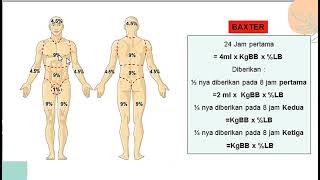
* **General Principle:** The video likely introduces a rule or a set of guidelines to estimate the percentage of Total Body Surface Area (TBSA) affected by the burn.
* **Likely Method (based on common nursing practices):**
* **The Rule of Nines:** This is a standard method for estimating TBSA in adults. The body is divided into sections, each representing a specific percentage of TBSA.
* Head and Neck: 9%
* Each Arm: 9% (total 18% for both)
* Anterior Trunk (chest and abdomen): 18%
* Posterior Trunk (back): 18%
* Each Leg: 18% (9% for anterior, 9% for posterior; total 36% for both)
* Perineum: 1%
* **Variations/Modifications:** The video might explain how to adapt the Rule of Nines for:
* **Children:** The percentages for head and legs are adjusted in children due to different body proportions.
* Head: 18% (initially)
* Legs: Decreases by 1% per year of age above 1 year, with the head proportion decreasing by the same amount.
* **Partial Burns:** Discussing how to estimate the TBSA for burns that don't cover the entire "section" (e.g., half an arm).
* **Visual Aids:** The presenter likely uses diagrams or visual representations of the body to illustrate the percentages associated with each area.
* **Practical Examples:** The video probably includes worked examples to demonstrate how to apply the rule for different burn scenarios.
* *Example:* Calculating the TBSA for a burn on the anterior trunk and one arm.
* **Memorization Techniques:** The "trick" could involve mnemonic devices or a systematic approach to make memorizing the percentages easier.
**III. Importance and Application of Burn Area Calculation**
* **Fluid Resuscitation:** The calculated TBSA is crucial for determining the amount of intravenous fluids needed in the first 24-48 hours (e.g., using the Parkland formula or its variations).
* **Pain Management:** The extent of the burn influences pain management strategies.
* **Nutritional Support:** Larger burn areas require increased caloric and protein intake.
* **Surgical Interventions:** The TBSA estimation guides decisions regarding debridement and skin grafting.
* **Prognosis:** The percentage of TBSA burned is a significant factor in predicting the patient's outcome.
**IV. Common Pitfalls and Clarifications**
* **Misinterpreting Percentages:** Clearly explaining what each percentage represents (e.g., 9% is not just the front of the arm, but the entire circumference of one arm).
* **Underestimation/Overestimation:** Discussing why these errors happen and how to avoid them.
* **Differentiation of Burn Depths:** While the primary focus is area, the video might briefly touch upon how burn depth affects treatment but not necessarily the *area* calculation itself.
**V. Conclusion and Call to Action**
* Reiteration of the importance of accurate burn area calculation.
* Encouragement for viewers to practice the method to become proficient ("auto paham").
* Potential call to subscribe or engage with the channel for more nursing-related content.
---
*Note: The exact "trick" or simplified method cannot be definitively stated without watching the video. However, the "Rule of Nines" and its pediatric adjustments are the most common and likely methods discussed in such a context.*
Related Summaries
![[캡컷PC]0015-복합클립만들기분리된영상 하나로 만들기](https://img.youtube.com/vi/qtUfil0xjCs/mqdefault.jpg)
Why this video matters
This video provides valuable insights into the topic. Our AI summary attempts to capture the core message, but for the full nuance and context, we highly recommend watching the original video from the creator.
Disclaimer: This content is an AI-generated summary of a public YouTube video. The views and opinions expressed in the original video belong to the content creator. YouTube Note is not affiliated with the video creator or YouTube.