Client नहीं बोलता ‘YES’? Here’s the 3P Sales Formula That Actually Closes Deals🔥
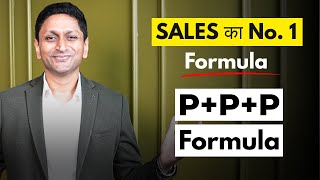
Comprehensive Notes: The 3P Sales Formula - Closing Deals Effectively
This document provides a structured breakdown of the YouTube video "Client नहीं बोलता ‘YES’? Here’s the 3P Sales Formula That Actually Closes Deals🔥" by Ankit Ravindra Jain.
---
1. Summary
This video introduces the **3P Sales Formula (Probing, Pitching, Pricing)** as a structured approach to consistently close deals. The core message is that weak sales call structure, not the product itself, is often the reason for lost sales. The formula provides a framework for asking effective questions to uncover client needs, pitching offers with clarity and impact, and presenting pricing confidently to minimize objections. The video aims to equip viewers, regardless of their industry (coaching, agency, freelancing, B2B), with the tools to improve their closing rates by guiding clients towards a "YES" without being pushy.
---
2. Key Takeaways
* **Weak Sales Call Structure is the Culprit:** Often, deals are lost due to a poorly structured sales conversation, not a faulty product.
* **The 3P Sales Formula:** A proven framework for consistent deal closing:
* **P**robing: Understanding client needs.
* **P**itching: Presenting your offer effectively.
* **P**ricing: Presenting price confidently and managing objections.
* **Effective Probing is Crucial:** Asking the right questions uncovers genuine client needs and pain points, which is the foundation of a successful sale.
* **Impactful Pitching:** Clarity, relevance, and demonstrating value are key to a high-impact pitch that resonates with the client.
* **Confident Pricing Presentation:** Strategies exist to present pricing in a way that reduces common objections and positions your offer as valuable.
* **Understanding the "Why" Behind "No":** Recognizing the psychological reasons clients decline offers helps in addressing them proactively.
* **Converting "Send Details" to Conversation:** Moving beyond generic requests to genuine dialogue is essential for closing.
* **Adaptable Framework:** The 3P formula is applicable across various sales roles and industries.
---
3. Detailed Notes
#### I. Introduction: The Problem and the Solution
* **Common Struggle:** Many sales professionals explain their product perfectly but still don't get a "YES" from clients.
* **Root Cause:** The issue is frequently not the product, but the **weak structure of the sales call**.
* **The 3P Sales Formula:** Introduced as a powerful framework used by top closers to convert clients consistently.
* **P**robing
* **P**itching
* **P**ricing
* **Goal of the Video:** To teach viewers how to ask better questions, pitch with clarity, present price confidently, and guide clients to a "YES" without being pushy.
#### II. The 3P Sales Formula Breakdown
**A. Probing (Understanding the Client)**
* **Purpose:** To uncover the client's *real* needs, desires, and pain points.
* **Why it's important:** You can't effectively pitch if you don't know what problem you're solving for the client.
* **Key Principles:**
* **Ask Open-Ended Questions:** Encourage detailed responses, not just "yes" or "no."
* **Focus on "Why" and "How":** Dig deeper into their situation.
* **Listen Actively:** Pay attention to verbal cues, tone, and what's *not* being said.
* **Identify Pain Points:** What challenges are they facing? What are the consequences of these challenges?
* **Understand Desired Outcomes:** What do they want to achieve? What does success look like for them?
* **Types of Probing Questions (Examples - *Specific examples not provided in the prompt, but implied by the section title*):**
* Questions about their current situation.
* Questions about challenges they face.
* Questions about their goals and aspirations.
* Questions about the impact of their current problems.
* **Turning "Send Details" into a Conversation:**
* Instead of immediately sending generic information, ask probing questions like: "What specifically about the details are you most interested in learning more about?" or "To ensure I send you the most relevant information, could you tell me what problem you're hoping to solve with this?"
**B. Pitching (Presenting Your Offer)**
* **Purpose:** To present your solution in a way that directly addresses the client's identified needs and desires.
* **Key Principles:**
* **Clarity:** Clearly articulate what your offer is and what it does.
* **Relevance:** Connect your offer directly to the client's pain points and goals discovered during probing. Use their language.
* **Value Proposition:** Emphasize the benefits and the transformation your offer provides, not just features.
* **High-Impact Delivery:** Be confident, enthusiastic, and engaging.
* **Storytelling:** Use examples or case studies to illustrate the impact.
* **Focus on Solutions, Not Problems:** Frame your pitch around how you solve their issues.
* **Structuring Your Pitch:**
* Acknowledge their problem/need.
* Introduce your solution.
* Explain how it works (briefly).
* Highlight the key benefits and outcomes.
* Provide social proof or evidence if available.
**C. Pricing (Presenting Your Price)**
* **Purpose:** To present your price confidently and effectively, minimizing objections.
* **Key Principles:**
* **Contextualize the Price:** Frame it as an investment, not an expense.
* **Highlight ROI:** Show the return on investment the client will receive.
* **Anchor the Value:** Ensure the perceived value far outweighs the price.
* **Be Confident:** If you believe in your price, your client is more likely to.
* **Address Objections Proactively:** Anticipate common objections and have answers ready.
* **Offer Options (if applicable):** Tiered pricing can cater to different budgets and needs.
* **Connect Price to Value:** Reiterate how the price aligns with the solutions and benefits provided.
* **Pricing Strategies to Reduce Objections (Examples - *Specific strategies not provided in the prompt, but implied*):**
* Focusing on the cost of *inaction* or the cost of their problem.
* Breaking down the price into smaller, more manageable units.
* Offering guarantees or risk reversals.
* **Psychology Behind "NO":**
* Fear of making the wrong decision.
* Lack of perceived value.
* Budget constraints (sometimes a perceived, not actual, constraint).
* Lack of trust.
* Unmet needs.
#### III. Psychology Behind Why Clients Say "NO"
* Understanding these reasons is key to overcoming them.
* **Fear of regret:** Not wanting to make a bad decision.
* **Lack of belief:** Doubting the effectiveness of the solution or the provider.
* **Perceived value gap:** Believing the price is higher than the benefit received.
* **Timing:** It might not be the right time for them.
* **Internal barriers:** Hesitation, indecision, or being overwhelmed.
#### IV. Actionable Framework & Application
* **Complete 3P Breakdown:** The video provides a framework that can be copied.
* **Applicable Across Industries:**
* Coaching
* Agency Work
* Freelancing
* B2B Sales
* **Instant Improvement:** Implementing this formula can immediately improve closing rates.
* **Call to Action:** Watch till the end, as one framework can change your entire sales game.
---
Related Summaries
![[캡컷PC]0015-복합클립만들기분리된영상 하나로 만들기](https://img.youtube.com/vi/qtUfil0xjCs/mqdefault.jpg)
Why this video matters
This video provides valuable insights into the topic. Our AI summary attempts to capture the core message, but for the full nuance and context, we highly recommend watching the original video from the creator.
Disclaimer: This content is an AI-generated summary of a public YouTube video. The views and opinions expressed in the original video belong to the content creator. YouTube Note is not affiliated with the video creator or YouTube.