Competition & Cooperation: Bears Vs. Wolves (Accessible Preview)
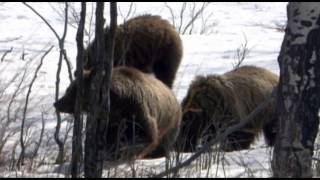
Competition & Cooperation: Bears Vs. Wolves (Yellowstone National Park)
**Source:** Described and Captioned Media Program (DCMP)
**Producer/Distributor:** NEW DIMENSION MEDIA/QUESTAR
**Production Year:** 2012
**Grade Level:** 7-12
---
1. Summary
This video explores the dynamic predator-prey relationships in Yellowstone National Park, focusing on the competition and cooperation between grizzly bears and wolf packs for food resources. It highlights how these two apex predators, despite their different strengths, influence the entire food chain. The narrative emphasizes the balance of power, strategies for survival, and the cascading effects of their interactions on other scavengers and organisms within the park's complex ecosystem.
---
2. Key Takeaways
* Yellowstone National Park is a complex ecosystem with numerous predators, scavengers, and opportunists.
* Grizzly bears and wolf packs are the two dominant predators in Yellowstone.
* Grizzly bears rely on size and power, while wolves utilize speed and teamwork.
* Competition for food resources is a central theme, with bears and wolves frequently clashing.
* These predator interactions directly impact the survival of other species in the food chain, particularly scavengers.
* The video illustrates survival strategies and the balance of power between these formidable species.
---
3. Detailed Notes
**I. Introduction to Yellowstone's Ecosystem**
* Described as a "vast and complex kingdom."
* Inhabited by a diverse range of organisms: predators, scavengers, and opportunists.
* Emphasis on the natural balance and interconnectedness of life.
**II. Apex Predators: Bears and Wolves**
* **Grizzly Bears:**
* Characterized by "size and power."
* Dominant presence in the park.
* Engage in direct confrontation for resources.
* **Wolf Packs:**
* Characterized by "speed and teamwork."
* Utilize coordinated hunting strategies.
* Operate as a collective unit to overcome prey and compete with bears.
**III. Competition for Food Resources**
* **Central Conflict:** Bears and wolves contend for control of the food supply.
* **Nature of Competition:**
* Direct confrontations and territorial disputes.
* Interference with each other's kills.
* "Testing their strategies for survival against each other."
* **Examples of Competition (implied/potential):**
* Wolves potentially scavenging from bear kills.
* Bears disrupting wolf hunts or stealing wolf-caught prey.
* Competition for carcasses of large animals (e.g., elk, bison).
**IV. Impact on the Food Chain**
* **"Entire food chain of scavengers survive in their wake."**
* **Scavengers' Dependence:** Species like coyotes, ravens, magpies, and even insects benefit from the leftovers and carcasses left by bear and wolf activities.
* **Cascading Effects:** The actions of apex predators create opportunities and dictate the survival of lower trophic levels.
* **Ecosystem Regulation:** The presence and interactions of these predators help regulate prey populations, which in turn affects vegetation and other aspects of the environment.
**V. Survival Strategies**
* **Grizzly Bears:** Rely on brute strength, formidable claws, and sheer size to intimidate rivals and secure food.
* **Wolf Packs:** Emphasize pack coordination, communication, strategic positioning, and endurance to hunt effectively and defend their prey.
* **Adaptability:** Both species demonstrate remarkable adaptation to their environment and to the challenges posed by their competitors.
**VI. Conclusion (Implied)**
* The ongoing dynamic between bears and wolves is a crucial element of Yellowstone's ecological health.
* This competition, alongside cooperation within packs, drives the intricate web of life in the park.
Related Summaries
![[캡컷PC]0015-복합클립만들기분리된영상 하나로 만들기](https://img.youtube.com/vi/qtUfil0xjCs/mqdefault.jpg)

Why this video matters
This video provides valuable insights into the topic. Our AI summary attempts to capture the core message, but for the full nuance and context, we highly recommend watching the original video from the creator.
Disclaimer: This content is an AI-generated summary of a public YouTube video. The views and opinions expressed in the original video belong to the content creator. YouTube Note is not affiliated with the video creator or YouTube.