COMPLETE Class 10 Hindi in One Shot 🔥 | Full NCERT Coverage | Rapid Revision | Board Exam 2026
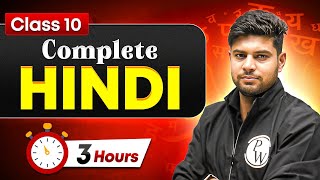
Class 10 Hindi: One Shot Rapid Revision for Board Exam 2026 (UDAAN - Class 10)
Summary
This comprehensive "one-shot" video from UDAAN - Class 10, presented by Umesh Parmar Sir, offers a rapid revision of the entire Class 10 Hindi NCERT syllabus for the Board Exam 2026. It covers all essential chapters, themes, and exam-focused points in an easy-to-understand language, making it ideal for quick and confident preparation. The session is structured into key sections: Vyavaharik Vyakaran (Practical Grammar), Lekhan (Writing Skills), and Pathyapustak evam Purak Pathyapustak (Textbook and Supplementary Textbook).
Key Takeaways
* **Comprehensive Coverage:** The video aims to cover the full Class 10 Hindi NCERT syllabus in a single session.
* **Rapid Revision Focus:** Designed for quick understanding and last-minute preparation for Board Exams.
* **Structured Approach:** Content is divided into three main sections: Grammar, Writing, and Literature (Prose & Poetry).
* **Exam-Oriented:** Highlights important chapters, themes, and exam-focused points.
* **Easy Language:** Explanations are provided in simple and accessible Hindi.
* **Free Resources:** Participants are encouraged to enroll for FREE and grab FREE NOTES from the provided link.
Detailed Notes
---
**00:00 - 00:25: Introduction (परिचय)**
* Welcome to the rapid revision session for Class 10 Hindi, Board Exam 2026.
* This video will cover the entire syllabus in one shot.
---
**00:25 - 47:20: Section - K (Grammar) (खंड - ख (व्यावहारिक व्याकरण))**
* **Focus:** Practical Grammar topics essential for the exam.
* *(Specific grammar topics within this section would be detailed here if the video transcript provided them. This timestamp likely covers topics like Shabd Vichar, Vakya Vichar, Ras, Chhand, Alankar, Arth Bichar, etc., depending on the NCERT syllabus structure for Class 10 Hindi.)*
---
**47:20 - 01:22:38: Vachya (वाच्य)**
* **Explanation of Vachya:** The grammatical voice in Hindi.
* **Types of Vachya:**
* **Kartri Vachya (Active Voice):** Subject performs the action.
* **Karma Vachya (Passive Voice):** Object receives the action.
* **Bhav Vachya (Impersonal Voice):** Focus on the action or feeling, often with no subject or object performing the action.
* **Identification and Conversion:** Methods to identify and convert sentences between different Vachya forms.
* **Exam Relevance:** Importance of Vachya for comprehension and sentence construction in exams.
---
**01:22:38 - 02:00:07: Section - G (Writing) (खंड घ-लेखन)**
* **Focus:** Various writing formats and their application.
* **Topics Covered:**
* **Anuchhed Lekhan (Paragraph Writing):** Structure, content, and tips for effective paragraphs.
* **Patra Lekhan (Letter Writing):** Formal and informal letter formats, key components, and appropriate language.
* **Swavrit Lekhan (Resume/CV Writing):** Essential elements of a resume, purpose, and format.
* **E-mail Lekhan (Email Writing):** Structure, etiquette, and practical use.
* **Vigyapan Lekhan (Advertisement Writing):** Elements of a catchy advertisement, target audience, and persuasive techniques.
* **Sandesh Lekhan (Message Writing):** Concise and clear message writing for various occasions.
* **Exam Strategy:** How to approach these writing tasks in the board exam for maximum marks.
---
**02:00:07 - 03:39:52: Section - G (Textbook & Supplementary Textbook) (खंड - ग (पाठ्यपुस्तक एवं पूरक पाठ्यपुस्तक))**
This section covers the literary content from the main textbook (likely Kshitij Bhag 2) and the supplementary reader (likely Kritika Bhag 2).
#### **Poetry (पद) (02:02:25 - 02:18:37)**
* **Surdas (सूरदास):**
* Detailed analysis of poems by Surdas.
* Themes: Bhakti, Krishna Leela, nature.
* Key concepts and literary devices.
* **Ram-Lakshman-Parshuram Samvad (राम-लक्ष्मण-परशुराम संवाद) by Tulsidas (तुलसीदास):**
* Explanation of the dialogue between Rama, Lakshmana, and Parashurama.
* Themes: Ego, pride, respect, divine power.
* Character analysis and key verses.
* **Kavyabodh Par Aadharit Prashnottar (काव्यबोध पर आधारित प्रश्नोत्तर) (02:32:54):**
* Practice questions based on poetry comprehension, identification of figures of speech, and literary analysis.
* **Aatmakathya (आत्मकथ्य) by Jaishankar Prasad (जयशंकर प्रसाद) (02:33:40):**
* Theme: The writer's reluctance to write an autobiography, the bittersweet nature of life.
* Analysis of emotions and poetic expression.
* **'Utsah' (उत्साह) and 'At Nahi Rahi Hai' (अट नहीं रही है) by Suryakant Tripathi 'Nirala' (सूर्यकांत त्रिपाठी 'निराला') (02:45:16):**
* **Utsah:** Theme of enthusiasm, energy, and the arrival of clouds bringing life.
* **At Nahi Rahi Hai:** Theme of spring, nature's beauty, and its overwhelming presence.
* Poetic devices and imagery.
* **Yeh Danturit Muskaan (यह दंतुरित मुसकान) and Famal (फसल) by Nagarjun (नागार्जुन) (02:52:58):**
* **Yeh Danturit Muskaan:** The innocent smile of a child and its impact.
* **Famal:** The collective effort and beauty of harvest, symbolizing the contribution of many.
* **Sangatkar (संगतकार) by Manglesh Dabral (मंगलेश डबराल) (03:04:02):**
* Theme: The importance of the accompanist, their silent support, and their role in the success of the main artist.
* Appreciation of understated contributions.
#### **Prose (गद्य) (03:12:16 onwards)**
* **Netaji Ka Chashma (नेताजी का चश्मा) by Swyam Prakash (स्वयं प्रकाश) (03:12:16):**
* Theme: Patriotism, subtle acts of remembrance, and the common man's contribution.
* Character analysis (Haldaar Sahab, Nanhe Sing).
* **Balgovind Bhagat (बालगोविंद भगत) by Ramvriksh Benipuri (रामवृक्ष बेनीपुरी) (03:17:30 / 03:25:32):**
* A portrayal of a simple, devout man living by his principles.
* Themes: Spirituality, simplicity, social norms.
* Character sketch of Balgovind Bhagat.
* **Lakhanvi Andaaz (लखनवी अंदाज) by Yashpal (यशपाल) (03:25:32):**
* Satire on the superficiality and pretentiousness of the aristocracy.
* The narrator's observation of a "nawabi" style.
* **Ek Kahani Yeh Bhi (एक कहानी यह भी) by Mannu Bhandari (मन्नू भंडारी) (03:31:04):**
* Autobiographical narrative focusing on the author's formative years, rebellion, and political awakening.
* **Naubatkhane Mein Ibadat (नौबतखाने में इबादत) by Yatindra Mishra (यतींद्र मिश्रा) (03:35:00):**
* A biographical sketch focusing on the life and devotion of the Shehnai maestro, Bismillah Khan.
* Themes: Art, dedication, spiritual connection through music.
* **Sanskriti (संस्कृति) by Bhadant Anand Kausalyayan (भदंत आनंद कौसल्यायन) (03:37:48):**
* Exploration of the concept of culture, its evolution, and its importance in human life.
#### **Kritika Book (कृतिका BOOK) (03:39:52 onwards)**
* **Mata Ka Anchal (माता का अंचल) (03:42:50):**
* Nostalgic account of childhood, relationship with parents, and rural life.
* **Main Kyon Likhata Hun (मैं क्यों लिखता हूँ) by Premchand (or similar author, based on common syllabus) (03:48:25):**
* *(Assuming this is about the author's motivation for writing, likely exploring the purpose and impact of writing.)*
---
**03:52:00: Thank You (धन्यवाद)**
* Concluding remarks and good wishes for the board exams.
---
**Note:** The detailed content within each timestamp for grammar and literature would be elaborated upon during the actual video viewing. This structured note provides a clear outline and highlights the key components covered in the "One Shot" revision.
Related Summaries
![[캡컷PC]0015-복합클립만들기분리된영상 하나로 만들기](https://img.youtube.com/vi/qtUfil0xjCs/mqdefault.jpg)
Why this video matters
This video provides valuable insights into the topic. Our AI summary attempts to capture the core message, but for the full nuance and context, we highly recommend watching the original video from the creator.
Disclaimer: This content is an AI-generated summary of a public YouTube video. The views and opinions expressed in the original video belong to the content creator. YouTube Note is not affiliated with the video creator or YouTube.