Driving At Night - Part 1
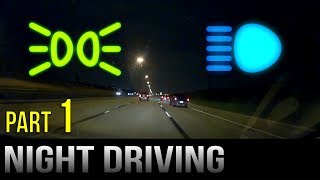
Driving At Night - Part 1 (Conduite Facile)
1. Summary
This video, "Driving At Night - Part 1" by Conduite Facile, provides essential information for safe night driving. It covers the proper use and understanding of vehicle lighting systems, including dashboard indicators and switch positions. The video also discusses techniques for improving visibility by utilizing reflections, recognizing less visible road users, and addressing the dangers of fatigue and alcohol. Finally, it offers advice on essential actions to take before and after parking the vehicle at night.
2. Key Takeaways
* **Understanding Vehicle Lights:** Essential to know the function of each light position and its corresponding dashboard indicator.
* **Maximizing Visibility:** Utilize reflections on the road surface and other vehicles to better perceive your surroundings.
* **Identifying Vulnerable Road Users:** Be extra vigilant for pedestrians, cyclists, and other road users who are harder to see at night.
* **Combating Fatigue and Alcohol:** Recognize the severe impairment these factors cause to driving ability and avoid them entirely.
* **Pre and Post-Parking Checks:** Implement specific actions before and after parking to ensure safety and security.
* **Daytime Running Lights vs. Fog Lights:** Clarification that "daytime running lights" are sometimes colloquially referred to as "fog lights" due to their use, but the true fog light switch and functionality are distinct and not always present.
* **Jurisdictional Variations:** Laws, rules, and driving exam requirements can differ significantly by location; always adhere to local regulations.
3. Detailed Notes
#### 3.1. Vehicle Lighting System
* **Light Switch Positions & Dashboard Indicators:**
* Understanding the symbols and their corresponding functions is crucial.
* **Low Beams (Dipped Headlights):** Standard for driving at night on well-lit roads or when approaching other vehicles.
* **High Beams (Main Headlights):** For unlit roads with no oncoming traffic. Must be dipped when encountering other vehicles to avoid dazzling them.
* **Parking Lights (Sidelights):** For parking at the edge of the road when visibility is low.
* **Daytime Running Lights (DRLs):** Often automatically activated during daylight.
* **Note on DRLs vs. Fog Lights:** While DRLs are sometimes *called* fog lights colloquially because people use them for that purpose, the actual fog light switch is separate and controls a different set of lights, usually located on the front bumper. Not all vehicles have dedicated fog lights.
* **Fog Lights (Front and Rear):** Used in conditions of poor visibility due to fog, heavy rain, or snow. Require specific activation via a separate switch.
* **Dashboard Indicators:**
* Familiarize yourself with the visual cues on the dashboard that confirm which lights are active.
#### 3.2. Enhancing Visibility and Perception
* **Using Reflections:**
* Pay attention to reflections on parked vehicles and the asphalt. These can reveal the presence of:
* Pedestrians, cyclists, or animals near the roadside.
* The edges of the road or obstacles.
* **Barely Visible Road Users:**
* **Pedestrians:** Often wearing dark clothing, making them difficult to spot. Be especially cautious in residential areas and near pedestrian crossings.
* **Cyclists:** May not always have bright lights.
* **Animals:** Can unexpectedly enter the roadway.
* **Moped/Scooter Riders:** May be less visible than cars.
#### 3.3. Dangers of Fatigue and Alcohol
* **Fatigue:**
* Significantly impairs judgment, reaction time, and concentration.
* Symptoms include yawning, heavy eyelids, and difficulty focusing.
* **Action:** If fatigued, pull over to a safe location and rest. Do not try to "push through."
* **Alcohol:**
* Even small amounts of alcohol severely degrade driving ability.
* Affects coordination, vision, and decision-making.
* **Action:** Never drive under the influence of alcohol. Plan for alternative transportation if you will be drinking.
#### 3.4. Actions Before and After Parking
* **Before Leaving the Car (Parking):**
* **Check Surroundings:** Ensure it is safe to exit the vehicle. Be aware of passing traffic.
* **Secure the Vehicle:** Engage the handbrake/parking brake.
* **Turn Off Lights:** Select the appropriate light setting for parking (e.g., parking lights if required, or turn all lights off if not necessary).
* **Lock Doors:** Ensure all doors are securely locked.
* **After Leaving the Car (Once Parked):**
* **Visibility Check:** If parking in a dark area, ensure your exiting the vehicle doesn't create a hazard for others.
* **Return to Car:** When returning to your parked car at night, approach it cautiously. Be aware of your surroundings.
#### 3.5. Important Disclaimers
* **Local Laws and Rules:** Driving laws, regulations, and driving exam requirements vary by location. This video is a general guide and **must not** replace adherence to your local laws.
* **Vehicle Specifics:** Distances and visual cues may differ based on driver height, vehicle size, and type.
* **Not Legal Advice:** This video is for informational purposes and is not a substitute for official driving courses or legal advice.
* **Responsibility:** By implementing any advice from this video, you assume full responsibility for your actions and any consequences.
Related Summaries
![[캡컷PC]0015-복합클립만들기분리된영상 하나로 만들기](https://img.youtube.com/vi/qtUfil0xjCs/mqdefault.jpg)

Why this video matters
This video provides valuable insights into the topic. Our AI summary attempts to capture the core message, but for the full nuance and context, we highly recommend watching the original video from the creator.
Disclaimer: This content is an AI-generated summary of a public YouTube video. The views and opinions expressed in the original video belong to the content creator. YouTube Note is not affiliated with the video creator or YouTube.