EPOKI 00. Proces historycznoliteracki- wprowadzenie. Epoki klasyczne/ romantyczne. Kanon estetyczny.
Here's a comprehensive and structured note based on the provided YouTube video information:
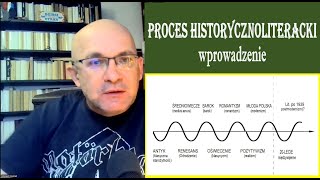
EPOKI 00. Proces historycznoliteracki - Wprowadzenie. Epoki klasyczne/romantyczne. Kanon estetyczny. (Ponury Polonista)
1. Summary
This introductory video by Ponury Polonista provides a foundational overview of the literary historical process, focusing on the categorization of literary epochs. It explains how epochs can be classified based on their relationship to the classical canon of beauty, differentiating between "classical" and "romantic" periods. Furthermore, it introduces the concept of epoch division based on dominant worldviews: anthropocentric (human-centered) versus theocentric (God-centered). The video then lists and briefly contextualizes major Polish literary epochs from Antiquity to the present day, outlining their chronological placement and general characteristics.
2. Key Takeaways
* The literary historical process involves the study and categorization of literary epochs.
* Epochs can be classified based on their relationship to the **classical canon of beauty**, leading to a division into **classical** and **romantic** epochs.
* Epochs can also be categorized by their dominant **worldview**: **anthropocentric** (human-focused) or **theocentric** (God-focused).
* A chronological overview of major Polish literary epochs is presented, from Antiquity to contemporary literature.
* Understanding these classifications and chronological order is crucial for literary analysis and preparation for exams like the Matura.
3. Detailed Notes
I. Introduction to the Literary Historical Process
* **Purpose:** To introduce the concept of the literary historical process and the methods of dividing literature into epochs.
* **Key Concepts:**
* **Literary Epochs:** Distinct periods in literary history characterized by shared stylistic features, themes, and worldviews.
* **Literary Historical Process:** The ongoing development and evolution of literature over time, including the changes and continuities between epochs.
II. Categorization of Epochs: Two Primary Axes
The video proposes two main criteria for dividing literary epochs:
1. **Relationship to the Classical Canon of Beauty:**
* **Classical Epochs:** Embrace and adhere to the principles of classical aesthetics (harmony, order, balance, reason, imitation of nature, form).
* **Romantic Epochs:** Depart from classical norms, emphasizing emotion, individualism, imagination, the sublime, the subjective, and often a rejection of strict forms.
2. **Dominant Worldview:**
* **Theocentric Epochs:** Dominated by a religious worldview where God is central. Focus is on divine order, faith, sin, salvation, and the spiritual realm.
* **Anthropocentric Epochs:** Dominated by a human-centered worldview. Focus is on human reason, experience, emotions, society, and the material world.
III. Chronological Overview of Polish Literary Epochs
The video presents a list of key Polish literary epochs in chronological order, providing a framework for understanding literary development:
1. **Antiquity (Starożytność):**
* **Worldview:** Primarily anthropocentric (Greek and Roman focus on human potential, reason, philosophy) but with a significant influence of mythology and polytheism.
* **Classical Canon:** The foundation of Western classical aesthetics.
2. **Middle Ages (Średniowiecze):**
* **Worldview:** Predominantly **theocentric**. Christianity heavily influences themes (faith, sin, salvation, divine will) and values.
* **Classical Canon:** Influence is present but often filtered through religious and medieval perspectives.
3. **Renaissance (Renesans / Odrodzenie):**
* **Worldview:** A shift towards **anthropocentrism**. "Man is the measure of all things." Renewed interest in classical antiquity, humanism, reason, and earthly life.
* **Classical Canon:** Strong revival and adaptation of classical forms and ideals.
4. **Baroque (Barok):**
* **Worldview:** A period of intense spiritual and emotional conflict. Often a tension between theocentric and anthropocentric tendencies. Marked by disillusionment, existential questioning, and dramatic contrasts.
* **Classical Canon:** Baroque often plays with and subverts classical forms, leading to ornate and complex styles.
5. **Enlightenment (Oświecenie) / Classicism (Klasycyzm):**
* **Worldview:** Strong emphasis on **anthropocentrism**, reason, science, education, social reform, and progress.
* **Classical Canon:** A deliberate return to and adherence to classical principles of clarity, order, and didacticism. (Note: While Enlightenment is the broader period, Classicism is a significant stylistic manifestation within it).
6. **Romanticism (Romantyzm):**
* **Worldview:** Primarily **anthropocentric**, but with a profound focus on the individual's inner world, emotions, intuition, and national identity. Rejection of Enlightenment rationalism.
* **Classical Canon:** Direct opposition to and rejection of classical norms in favor of individual expression and emotional intensity.
7. **Positivism (Pozytywizm) / Realism (Realizm):**
* **Worldview:** Strongly **anthropocentric**. Focus on scientific observation, empirical evidence, social issues, practical progress, and objective depiction of reality.
* **Classical Canon:** Generally adheres to realistic representation, eschewing romantic idealism.
8. **Young Poland (Młoda Polska) / Modernism (Modernizm):**
* **Worldview:** A complex period with a return to subjective experience, symbolism, mysticism, and a questioning of positivist certainties. Often a blend of individualistic and decadent themes.
* **Classical Canon:** Exploration of new forms and subjective truths, often departing from strict realism or classicism.
9. **Interwar Period (Dwudziestolecie międzywojenne):**
* **Worldview:** Diverse, with various artistic and philosophical currents (avant-garde, neo-classicism, return to order). Often grappling with the aftermath of WWI and the interwar political climate.
* **Classical Canon:** Some movements revisited classical forms, while others pushed boundaries.
10. **Literature after 1939:**
* **1939-1945 (World War II):** Literature of occupation, resistance, and trauma. Intense focus on survival, moral choices, and national experience.
* **1945-1989 (Post-War / PRL):** Literature under communist rule. Often characterized by socialist realism, but also by underground literature, dissent, and emigré writing. Themes of political oppression, memory, and identity.
* **1989-Present (Post-Communist Era):** Literature reflecting the transition to democracy, globalization, new social challenges, and diverse contemporary issues.
IV. Importance of Epical Understanding
* Provides a framework for analyzing literary works.
* Helps in understanding the context in which a work was created.
* Crucial for academic success, particularly in matriculation exams (Matura).
* Understanding the "canon estetyczny" (aesthetic canon) is key to distinguishing between epochs.
Related Summaries
![[캡컷PC]0015-복합클립만들기분리된영상 하나로 만들기](https://img.youtube.com/vi/qtUfil0xjCs/mqdefault.jpg)

Why this video matters
This video provides valuable insights into the topic. Our AI summary attempts to capture the core message, but for the full nuance and context, we highly recommend watching the original video from the creator.
Disclaimer: This content is an AI-generated summary of a public YouTube video. The views and opinions expressed in the original video belong to the content creator. YouTube Note is not affiliated with the video creator or YouTube.