Forex trading for Beginners - What's Forex? Part 1
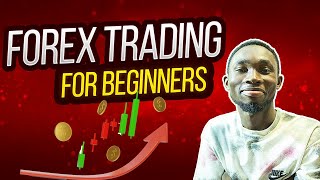
Forex Trading for Beginners - What's Forex? Part 1 (Tech In Twi)
1. Summary
This video, "Forex Trading for Beginners - What's Forex? Part 1" by Tech In Twi, serves as an introductory guide to the world of currency trading. It aims to demystify forex for newcomers by explaining what forex trading is, defining essential terminology, and outlining the fundamental workings of the forex market. The video's primary goal is to equip beginners with the foundational knowledge needed to start their journey in forex trading.
2. Key Takeaways
* **Forex is the Foreign Exchange Market:** It's the largest and most liquid financial market globally, where currencies are bought and sold.
* **Global and Decentralized:** Forex operates 24 hours a day, five days a week, across major financial centers worldwide, without a central exchange.
* **Trading is Speculative:** Forex traders aim to profit from fluctuations in the exchange rates between currency pairs.
* **Currency Pairs:** All forex trades involve a pair of currencies, with one being the base currency and the other the quote currency.
* **Pip (Percentage in Point):** The smallest unit of price movement in currency trading.
* **Leverage:** A tool that allows traders to control a larger position with a smaller amount of capital, amplifying both potential profits and losses.
* **Brokers:** Intermediaries that provide platforms and access to the forex market for traders.
3. Detailed Notes
I. What is Forex?
* **Definition:** Forex stands for Foreign Exchange. It is the global marketplace where national currencies are traded against each other.
* **Scale:** It is the largest financial market in the world by trading volume, far exceeding stock markets.
* **Decentralized Nature:** There is no single physical location or central exchange for forex trading. It operates electronically over-the-counter (OTC) through a network of banks, corporations, financial institutions, and individual traders.
* **24/5 Operation:** The market is open 24 hours a day, five days a week, following the sun across major financial hubs: Sydney, Tokyo, London, and New York.
* **Purpose:**
* **Facilitating International Trade & Investment:** Businesses and individuals need to exchange currencies to conduct cross-border transactions.
* **Speculation:** Traders participate to profit from anticipated movements in currency exchange rates.
II. Key Trading Terms
* **Currency Pair:**
* Every forex trade involves a combination of two currencies.
* **Base Currency:** The first currency in the pair (e.g., EUR in EUR/USD). It is the currency being bought or sold.
* **Quote Currency (Counter Currency):** The second currency in the pair (e.g., USD in EUR/USD). It indicates how much of the quote currency is needed to buy one unit of the base currency.
* **Example:** In EUR/USD, if the rate is 1.1000, it means 1 Euro can buy 1.1000 US Dollars.
* **Pip (Percentage in Point):**
* The smallest unit of price movement in forex trading.
* For most currency pairs, a pip is the fourth decimal place (0.0001).
* **Exception:** Pairs involving the Japanese Yen (JPY), where a pip is the second decimal place (0.01).
* **Significance:** Pips are used to measure profit and loss.
* **Bid/Ask Spread:**
* **Bid Price:** The price at which a dealer is willing to buy the base currency (the lower price).
* **Ask Price:** The price at which a dealer is willing to sell the base currency (the higher price).
* **Spread:** The difference between the bid and ask price. This is the transaction cost for traders.
* **Leverage:**
* A risk management tool that allows traders to control a larger position size with a smaller amount of capital.
* **Mechanism:** Brokers lend traders money to increase their trading power.
* **Ratio:** Expressed as a ratio, e.g., 100:1 means for every $1 of your capital, you can control $100 in the market.
* **Amplification:** Leverage magnifies both potential profits and potential losses. **Crucial to understand and use with caution.**
* **Margin:**
* The amount of capital required in your trading account to open and maintain a leveraged position.
* It's a good-faith deposit, not a fee.
* **Margin Call:** If your losses reduce your account equity below the required margin level, your broker may issue a margin call, requiring you to deposit more funds or close your positions.
III. How the Forex Market Works
* **Trading Mechanism:**
* Traders speculate on whether a currency will strengthen (appreciate) or weaken (depreciate) against another.
* **Going Long (Buy):** If you believe the base currency will rise in value against the quote currency, you buy the pair. You profit if the exchange rate increases.
* **Going Short (Sell):** If you believe the base currency will fall in value against the quote currency, you sell the pair. You profit if the exchange rate decreases.
* **Market Participants:**
* **Central Banks:** Influence currency values through monetary policy and direct intervention.
* **Commercial Banks:** Facilitate international trade and investment, and speculate on currency movements.
* **Investment Funds & Hedge Funds:** Large institutional players with significant capital to trade forex.
* **Retail Traders (Individual Traders):** Individuals trading smaller amounts, often through online brokers.
* **Factors Influencing Exchange Rates:**
* **Interest Rates:** Higher interest rates generally attract foreign capital, increasing demand for the currency.
* **Inflation:** High inflation can devalue a currency.
* **Economic Performance:** Strong GDP growth, low unemployment, and trade balance can strengthen a currency.
* **Political Stability & Geopolitical Events:** Uncertainty or instability can lead to currency depreciation.
* **Market Sentiment:** Overall investor confidence and risk appetite.
* **Brokers:**
* Act as intermediaries between traders and the interbank forex market.
* Provide trading platforms, execution of trades, and often leverage.
* **Important:** Choosing a reputable and regulated broker is essential.
Related Summaries
![[캡컷PC]0015-복합클립만들기분리된영상 하나로 만들기](https://img.youtube.com/vi/qtUfil0xjCs/mqdefault.jpg)
Why this video matters
This video provides valuable insights into the topic. Our AI summary attempts to capture the core message, but for the full nuance and context, we highly recommend watching the original video from the creator.
Disclaimer: This content is an AI-generated summary of a public YouTube video. The views and opinions expressed in the original video belong to the content creator. YouTube Note is not affiliated with the video creator or YouTube.