How I Make $68K/Month Investing in Stocks (Just Copy Me)
How I Make $68K/Month Investing in Stocks (Just Copy Me) - Notes
1. Summary
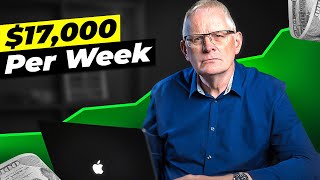
Mark Tilbury's video provides a beginner-friendly guide to investing in the stock market, emphasizing the importance of starting early to combat inflation and build wealth over time. He shares his personal investment strategy, which has generated substantial passive income ($17,000 USD per week) and highlights the use of index funds as a key strategy for success. The video covers essential aspects of investing, from understanding why to invest and how to select stocks to managing risks and timing sales.
2. Key Takeaways
* **Start Investing Early:** The sooner you start, the better, to maximize the benefits of compounding.
* **Prioritize Debt & Emergency Funds:** Pay off high-interest debts (like credit cards) and establish an emergency fund (3-6 months expenses) before investing.
* **Consider Index Funds:** A simple, effective strategy, especially for beginners.
* **Diversify:** Spread investments across different asset classes (e.g., stocks, bonds).
* **Long-Term Approach:** Focus on long-term investing rather than short-term trades and avoid selling stocks unnecessarily.
3. Detailed Notes
#### **Why Invest?**
* **Overcoming Inflation:** Investing is necessary to prevent your money from losing value due to inflation.
* **Historical Average Inflation:** Average rate of inflation is 3.8% per year over the past 60 years.
#### **How to Make Money Investing in Stocks**
* **Stock as Ownership:** Buying a stock makes you a shareholder.
* **Two Ways to Profit:**
* Selling shares for more than you bought them.
* Receiving dividends (periodic payments).
* **Compounding**: the "magic" is owning stocks which grows at 10% or more.
#### **When Should I Start Investing?**
* **As Soon as Possible:** The younger you are when you start, the better, as it provides more time for investments to grow and compound.
* **Key Steps to Take Before Investing:**
* Pay off high-interest debt (e.g., credit cards).
* Build up an emergency fund (3-6 months' worth of living expenses).
#### **How Much Should I Invest?**
* **Invest What You're Comfortable With:** Start with an amount that aligns with your comfort level.
* **70/20/10 Rule:**
* 70% for living expenses
* 20% for investments
* 10% for fun things.
#### **How to Buy a Stock**
* **Investment Apps:** Explore various investment apps (Trading 212 is used as example)
* **Account Type:** Open the right type of account (e.g., Roth IRA, ISA).
* **Fractional Shares:** Many apps allow you to buy fractional shares.
#### **How to Pick the Best Stocks?**
* **Two Main Approaches:**
* **Technical Analysis:** Looking at charts and patterns (short-term day traders often use this approach)
* **Fundamental Analysis:** Focusing on the company's financials, leadership, and brand recognition (long-term investors focus on this approach)
* **Focus on Fundamentals**
* **Long-term approach**: plan to hold a stock for at least 2-5 years.
#### **What's an Index Fund?**
* **How it Works:** It allows the average person to make more money than professionals.
* **Index Fund = Group of Stocks**: It's similar to a sports league table; companies are ranked and can be added or removed.
* **Benefits of Index Funds:**
* Diversification: Spreads investments across a wide range of companies.
* Lower Fees: Typically lower fees because they are passively managed (0.02% in the example).
* **Actively managed funds**: average a 2% lower return per year.
#### **What's The Best Index Fund to Invest In?**
* **S&P 500 Index Funds:**
* Historical Return: 8-10% per year.
* Diversification: Tracks 500 of the largest public companies in the USA.
* Consideration: Heavy on tech stocks, however, the video states this is not necessarily a negative.
* Examples: VFIAX or VOO ETF in the USA, and VUSA ETF in the UK.
* **Total Stock Market Index Funds:**
* Average Return: 13% per year over the last 10 years.
* Diversification: Offers exposure to the entire market.
* Consideration: Performance is tied to the overall market's performance.
* Examples: VTSAX and VTI ETF in the USA, and VWRL ETF in the UK.
* **Emerging Markets Index Funds:**
* Consideration: Potentially higher risk, but high growth.
* Examples: VEM ETF in the USA, and VFEM ETF in the UK.
#### **Is Investing Risky?**
* **Risk Defined**: You may lose money, but not investing can have a bigger risk.
* **Mitigating Risk:**
* Investing in a diversified portfolio of index funds.
* Investing regularly, over time, to mitigate market crashes.
* Mixing stocks with bonds in your portfolio.
#### **When Should I Sell My Stocks?**
* **Age-Dependent:**
* Older Investors: May sell to live on in retirement.
* Younger Investors: Reasons to Sell:
* Need for emergency funds.
* Bad investments (consider selling individual stocks underperforming consistently).
* Achieved a specific financial goal.
* **General Rule**: Do not sell stocks for as long as possible.
Related Summaries
![[캡컷PC]0015-복합클립만들기분리된영상 하나로 만들기](https://img.youtube.com/vi/qtUfil0xjCs/mqdefault.jpg)
Why this video matters
This video provides valuable insights into the topic. Our AI summary attempts to capture the core message, but for the full nuance and context, we highly recommend watching the original video from the creator.
Disclaimer: This content is an AI-generated summary of a public YouTube video. The views and opinions expressed in the original video belong to the content creator. YouTube Note is not affiliated with the video creator or YouTube.