HUMAN REPRODUCTION in ONE SHOT | All Concepts & PYQs | Basics to Advanced | Class 12 NEET
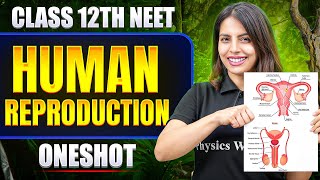
Human Reproduction - Complete Notes (Class 12 NEET)
This note provides a comprehensive overview of Human Reproduction as presented in the PW NEET YouTube video, covering key concepts and Previous Year Questions (PYQs) from basic to advanced levels.
---
1. Summary
This video offers a comprehensive, one-shot lecture on Human Reproduction, designed for Class 12 NEET aspirants. It systematically covers all essential aspects of the topic, from the male and female reproductive systems and gametogenesis to fertilization, implantation, embryonic development, pregnancy, and parturition. The lecture emphasizes the biological processes involved, hormonal regulation, and common reproductive health issues. Throughout the session, key concepts are reinforced with the integration of Previous Year Questions (PYQs) to aid in exam preparation.
---
2. Key Takeaways
* **Male Reproductive System:** Testes (primary sex organ), scrotum, epididymis, vas deferens, ejaculatory duct, urethra, penis, seminal vesicles, prostate gland, bulbourethral glands.
* **Female Reproductive System:** Ovaries (primary sex organ), fallopian tubes, uterus, cervix, vagina, mammary glands.
* **Gametogenesis:** Spermatogenesis (in testes, produces sperm) and Oogenesis (in ovaries, produces ovum).
* **Menstrual Cycle:** A cyclical process in females involving hormonal changes (FSH, LH, estrogen, progesterone) and changes in the ovary and uterus, leading to ovulation and preparation for pregnancy.
* **Fertilization:** The fusion of sperm and ovum, typically occurring in the ampulla of the fallopian tube.
* **Implantation:** The attachment of the blastocyst to the uterine wall (endometrium).
* **Embryonic Development:** Stages include zygote, morula, blastocyst, gastrula, and formation of germ layers (ectoderm, mesoderm, endoderm).
* **Placentation:** Formation of the placenta, which facilitates nutrient and gas exchange between mother and fetus.
* **Pregnancy:** Hormonal support from hCG, progesterone, and estrogen. Gestation period is approximately 9 months.
* **Parturition:** The process of childbirth, triggered by hormonal signals (oxytocin, relaxin) and uterine contractions.
* **Lactation:** Milk production by mammary glands, stimulated by prolactin and oxytocin.
* **Reproductive Health:** Importance of awareness and medical assistance for various reproductive issues and contraception methods.
---
3. Detailed Notes
#### I. Introduction to Human Reproduction
* **Definition:** Asexual vs. Sexual Reproduction. Humans are **bisexual** and reproduce **sexually**.
* **Significance:** Essential for the continuity of the species.
#### II. Male Reproductive System
1. **Primary Sex Organs:**
* **Testes (2):**
* Location: Extra-abdominal, within the **scrotum**.
* Function: **Spermatogenesis** (sperm production) and production of androgens (testosterone).
* Scrotum's Role: Maintains testicular temperature 2-2.5°C lower than normal body temperature, optimal for spermatogenesis.
* Descent of testes: Occurs during fetal development.
* **Structure of Testis:** Oval-shaped, about 4-5 cm in length. Covered by tunica albuginea.
* **Seminiferous Tubules:** Highly coiled tubes within lobules. Site of spermatogenesis. Lined by germinal epithelium (spermatogonia, sertoli cells) and Leydig cells (interstitial cells).
* **Sertoli Cells:** Nourish developing sperm cells.
* **Leydig Cells:** Secrete androgens (testosterone).
* **Rete Testis:** Network of tubules connecting seminiferous tubules to vasa efferentia.
2. **Accessory Ducts:**
* **Vasa Efferentia:** Carry sperm from rete testis to epididymis.
* **Epididymis:** Coiled tube attached to the testis. Site of sperm **maturation** and **storage**.
* **Vas Deferens (Ductus Deferens):** Ascends into the abdomen and loops over the urinary bladder.
* **Ejaculatory Duct:** Formed by the union of vas deferens and duct of seminal vesicle. Passes through the prostate and opens into the urethra.
* **Urethra:** Extends from the urinary bladder through the penis and opens externally as the **urethral meatus**. Receives ejaculatory ducts.
3. **Accessory Glands:**
* **Seminal Vesicles (2):** Paired glands. Secrete an alkaline fluid rich in fructose, prostaglandins, and enzymes. Contributes about 70% of semen volume.
* **Prostate Gland (1):** Surrounds the urethra. Secretes a milky, slightly acidic fluid containing citrate and enzymes. Contributes about 20-30% of semen volume.
* **Bulbourethral Glands (Cowper's Glands) (2):** Paired, pea-sized glands below the prostate. Secrete a lubricating alkaline mucus that helps lubricate the urethra and neutralize any acidic urine residue.
4. **External Genitalia:**
* **Penis:** External male organ. Composed of erectile tissue (corpora cavernosa and corpus spongiosum) that facilitates **insemination**. Urethra passes through the penis.
* **Glans Penis:** Enlarged tip of the penis, covered by a fold of skin called the **prepuce (foreskin)**.
#### III. Female Reproductive System
1. **Primary Sex Organs:**
* **Ovaries (2):** Almond-shaped, located in the pelvic cavity.
* Function: Produce **ova (eggs)** and **female hormones** (estrogen and progesterone).
* Structure: Cortex (follicles) and medulla (blood vessels, nerves). Each ovary is attached to the pelvic wall and uterus by ligaments.
2. **Accessory Ducts:**
* **Oviducts (Fallopian Tubes) (2):** Extend from the periphery of the ovary to the uterus. About 10-12 cm long.
* **Infundibulum:** Funnel-shaped opening near the ovary, with finger-like projections called **fimbriae** that help capture the ovum after ovulation.
* **Ampulla:** Wider, central part of the oviduct. **Site of fertilization**.
* **Isthmus:** Narrow junction connecting to the uterus.
* **Uterus:** Pear-shaped, muscular organ.
* Function: Site of **implantation**, **embryonic development**, and **parturition**.
* Layers:
* **Perimetrium:** Outer serous layer.
* **Myometrium:** Middle thick muscular layer (smooth muscle), responsible for strong contractions during childbirth.
* **Endometrium:** Inner glandular lining. Undergoes cyclical changes during the menstrual cycle. Richly supplied with blood vessels.
* **Cervix:** The lower, narrow part of the uterus that opens into the vagina. Cervical canal is the passage.
* **Vagina:** Muscular tube extending from the cervix to the outside. Receives the penis during intercourse (**copulation**) and serves as the birth canal.
3. **External Genitalia (Vulva):**
* **Mons Pubis:** Fatty tissue covered by skin and pubic hair.
* **Labia Majora:** Fleshy folds surrounding the vaginal opening.
* **Labia Minora:** Smaller folds inside the labia majora.
* **Clitoris:** Small, sensitive erectile organ at the upper junction of the labia minora. Homologous to the penis.
* **Hymen:** A thin membrane that may partially cover the vaginal opening.
* **Bartholin's Glands:** Secrete lubricating mucus.
4. **Mammary Glands:**
* Paired structures located in the thoracic region.
* Function: Produce **milk** to nourish the newborn.
* Structure: Glandular tissue (divided into mammary lobes containing alveoli) and variable amount of fat.
* Alveoli secrete milk, which is stored in the mammary duct, mammary ampulla, and finally released through the **lactiferous duct**.
#### IV. Gametogenesis
1. **Spermatogenesis:**
* Process: Occurs in the seminiferous tubules of testes from puberty onwards.
* Starts with **spermatogonia** (diploid germ cells).
* **Mitotic Divisions:** Spermatogonia divide mitotically to produce primary spermatocytes.
* **Meiosis I:** Primary spermatocyte undergoes meiosis I to form two **secondary spermatocytes** (haploid).
* **Meiosis II:** Each secondary spermatocyte undergoes meiosis II to form two **spermatids** (haploid).
* **Spermiogenesis:** Spermatids transform into **spermatozoa (sperm)**.
* **Hormonal Regulation:** GnRH (Hypothalamus) → FSH & LH (Anterior Pituitary) → FSH stimulates Sertoli cells for spermatogenesis; LH stimulates Leydig cells for testosterone production. Testosterone is essential for spermatogenesis.
* **Structure of Sperm:** Head (acrosome, nucleus), Neck, Middle piece (mitochondria), Tail.
2. **Oogenesis:**
* Process: Starts during embryonic development. Females are born with a finite number of **oogonia**.
* **Oogonia:** Undergo mitosis before birth.
* **Primary Oocytes:** Formed from oogonia and enter meiosis I, but get arrested at **Prophase I**. Each is surrounded by a single layer of granulosa cells, forming a **Primary Follicle**.
* **At Birth:** All primary oocytes are arrested in Prophase I of meiosis I.
* **Puberty:** FSH stimulates the maturation of a few primary follicles each menstrual cycle.
* **Secondary Follicle:** Primary follicle develops into a secondary follicle.
* **Tertiary Follicle:** Secondary follicle develops into a tertiary follicle, characterized by a fluid-filled cavity called the **antrum**.
* **Meiosis I Completion:** The primary oocyte inside the tertiary follicle completes meiosis I just before ovulation, forming a large **secondary oocyte** (haploid) and a small first polar body. The secondary oocyte begins meiosis II but arrests at **Metaphase II**.
* **Ovulation:** The secondary oocyte (arrested at Metaphase II) is released from the ovary.
* **Fertilization:** If fertilization occurs, the secondary oocyte completes meiosis II, forming a mature **ovum** (haploid) and a second polar body.
* **Hormonal Regulation:** Similar to males, but FSH stimulates follicular growth and estrogen secretion, while LH triggers **ovulation** and the formation of the corpus luteum.
#### V. Menstrual Cycle
* **Definition:** The cyclical changes in the female reproductive system that occur from puberty to menopause.
* **Duration:** Approximately 28 days (varies).
* **Phases:**
1. **Menstrual Phase (Days 1-5):**
* Shedding of the uterine endometrium, accompanied by bleeding.
* Caused by drop in progesterone and estrogen levels.
* Starts from the first day of menstruation.
2. **Follicular Phase (Days 6-13):**
* Regeneration of endometrium, thickening of uterine lining.
* Stimulated by **FSH**, which causes the development of ovarian follicles.
* Developing follicles secrete **estrogen**.
3. **Ovulatory Phase (Day 14):**
* A surge in **LH** (luteinizing hormone) triggers **ovulation** – release of a mature secondary oocyte from the ovary.
* Estrogen levels peak before LH surge.
4. **Luteal Phase (Days 15-28):**
* The ruptured follicle develops into the **Corpus Luteum**.
* Corpus luteum secretes large amounts of **progesterone** and some estrogen.
* Progesterone maintains the endometrium, preparing it for implantation.
* If fertilization does not occur, the corpus luteum degenerates after about 10 days, leading to a drop in progesterone and estrogen levels, initiating the next menstruation.
* If fertilization occurs, the corpus luteum is maintained by **hCG** (human chorionic gonadotropin) produced by the developing embryo.
#### VI. Fertilization and Implantation
1. **Fertilization:**
* **Definition:** Fusion of a sperm and an ovum.
* **Site:** Usually in the **ampulla** of the fallopian tube.
* **Process:**
* Sperms deposited during coitus travel through the cervix, uterus, and into the fallopian tubes.
* Only a few hundred reach the ovum.
* **Acrosome reaction:** Enzymes from the acrosome of sperm help penetrate the ovum's protective layers (corona radiata, zona pellucida).
* Fusion of sperm and ovum plasma membranes.
* **Cortical reaction:** Prevents polyspermy (entry of more than one sperm).
* Meiosis II of the secondary oocyte is completed.
* **Result:** Formation of a **zygote** (diploid, 2n).
* **Timing:** Sperm remain viable for up to 72 hours; ovum is viable for about 12-24 hours after ovulation.
2. **Cleavage and Blastocyst Formation:**
* **Cleavage:** Rapid mitotic divisions of the zygote as it travels down the fallopian tube towards the uterus.
* **Stages:**
* **2-cell stage, 4-cell stage, 8-cell stage:** Morula.
* **Morula:** Solid ball of cells. Reaches the uterus.
* **Blastocyst:** Morula develops a fluid-filled cavity (**blastocoel**) and becomes a blastocyst.
* **Trophoblast:** Outer layer of cells, responsible for implantation and development of the placenta.
* **Inner Cell Mass (Embryoblast):** Cluster of cells inside the trophoblast, will develop into the embryo.
3. **Implantation:**
* **Definition:** Attachment of the blastocyst to the uterine wall (endometrium).
* **Timing:** Occurs about 6-7 days after fertilization.
* **Process:** Blastocyst burrows into the endometrium, which is thickened and vascularized due to progesterone. Trophoblast cells proliferate and form villi.
#### VII. Pregnancy and Embryonic Development
1. **Gestation Period:** The period of embryonic development within the uterus, approximately 9 months (around 280 days).
2. **Placenta Formation:**
* Develops from the **chorion** (derived from trophoblast) and maternal tissues.
* **Functions:**
* **Exchange of gases (O2, CO2).**
* **Exchange of nutrients and waste products.**
* **Endocrine function:** Produces hormones like hCG, estrogen, progesterone, and human placental lactogen (hPL), which are essential for maintaining pregnancy.
* **Barrier:** Prevents some harmful substances from reaching the fetus, but not all.
3. **Embryonic Development Stages:**
* **Gastrulation:** The inner cell mass differentiates into three germ layers:
* **Ectoderm:** Forms nervous system, epidermis of skin.
* **Mesoderm:** Forms muscles, bone, cartilage, blood vessels, heart.
* **Endoderm:** Forms lining of digestive tract, respiratory tract, glands.
* **Organogenesis:** Formation of all organs and organ systems.
* **Growth:** Rapid growth and development of the fetus.
* **Fetal Development:** By the end of the first month, heart is formed. By the second month, limbs and digits develop. By the end of the third month, external genitalia are formed. During the fifth month, first movements are observed. By the end of the ninth month, fetus is fully developed.
4. **Hormonal Control of Pregnancy:**
* **hCG (Human Chorionic Gonadotropin):** Produced by the syncytiotrophoblast of the developing placenta. Maintains the corpus luteum, ensuring continued progesterone production. Basis for pregnancy tests.
* **Progesterone:** Essential for maintaining the endometrium, preventing uterine contractions, and development of mammary glands.
* **Estrogen:** Stimulates uterine growth and development of mammary glands.
* **hPL (Human Placental Lactogen):** Influences maternal metabolism to provide nutrients to the fetus.
#### VIII. Parturition (Childbirth)
* **Definition:** The process of delivery of the fetus from the uterus.
* **Trigger:** Mild uterine contractions (foetal ejection reflex). Hormonal signals from mature fetus and placenta trigger release of **oxytocin** from the mother's posterior pituitary.
* **Hormones Involved:**
* **Oxytocin:** Stimulates stronger uterine contractions.
* **Relaxin:** Produced by the corpus luteum and placenta, loosens pelvic ligaments for easier birth.
* **Stages:**
1. **Dilation Stage:** Cervix dilates, and uterus contracts strongly.
2. **Expulsion Stage:** Fetus is pushed out through the birth canal.
3. **Placental Stage:** The placenta is expelled from the uterus.
#### IX. Lactation
* **Definition:** Production and secretion of milk by mammary glands.
* **Hormonal Regulation:**
* **Prolactin:** From anterior pituitary, stimulates milk production.
* **Oxytocin:** From posterior pituitary, stimulates milk ejection (let-down reflex).
* **Composition of Milk:** Contains antibodies (IgA), nutrients, and growth factors that are beneficial for the infant's health.
* **Significance:** Provides nourishment and passive immunity to the newborn.
#### X. Reproductive Health
* **Importance:** Awareness about reproductive organs, functions, disorders, and contraception.
* **Contraception:** Methods to prevent unwanted pregnancies (e.g., barriers, IUDs, oral pills, surgical methods).
* **Sexually Transmitted Infections (STIs):** Diseases spread through sexual contact. Prevention and early detection are crucial.
* **Infertility:** Inability to conceive after a certain period of unprotected intercourse. Various Assisted Reproductive Technologies (ARTs) are available (e.g., IVF).
---
This comprehensive note covers the essential aspects of Human Reproduction for Class 12 NEET. Remember to refer to the video for detailed explanations and visual aids, especially for diagrams and PYQ discussions.
Related Summaries
![[캡컷PC]0015-복합클립만들기분리된영상 하나로 만들기](https://img.youtube.com/vi/qtUfil0xjCs/mqdefault.jpg)

Why this video matters
This video provides valuable insights into the topic. Our AI summary attempts to capture the core message, but for the full nuance and context, we highly recommend watching the original video from the creator.
Disclaimer: This content is an AI-generated summary of a public YouTube video. The views and opinions expressed in the original video belong to the content creator. YouTube Note is not affiliated with the video creator or YouTube.