Nationalism in India Class 10 Full Chapter | Class 10 History Chapter 2 | Sunlike study
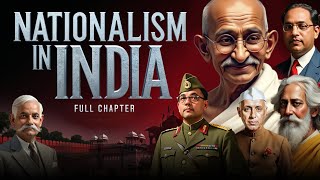
Nationalism in India - Class 10 History Chapter 2 (Sunlike study)
1. Summary
This video provides a comprehensive overview of the rise of nationalism in India, covering the period from the late 19th century to the achievement of independence. It explains the various movements, ideologies, and events that shaped the Indian national consciousness and led to the end of British rule. The key themes explored include the impact of British policies, the emergence of nationalist leaders and organizations, significant movements like the Non-Cooperation Movement, Civil Disobedience Movement, and Quit India Movement, and the eventual partition of India. The video emphasizes how a shared sense of identity and a common struggle against colonial oppression fostered a strong nationalist sentiment among diverse Indian populations.
2. Key Takeaways
* The concept of nationalism in India emerged as a response to British colonial policies and exploitation.
* Early forms of nationalism were often associated with socio-religious reform movements and the growth of educated Indian elites.
* The formation of the Indian National Congress (INC) in 1885 marked a significant step in organized political activity.
* The Swadeshi and Boycott movements, particularly in Bengal, were early expressions of mass nationalist mobilization.
* Mahatma Gandhi's philosophy of Satyagraha (truth force) and non-violence revolutionized the freedom struggle.
* The Non-Cooperation Movement (1920-22) was the first mass movement led by Gandhi, challenging British authority.
* The Civil Disobedience Movement (1930-34), including the Dandi March, highlighted the defiance of unjust laws.
* The Quit India Movement (1942) was a decisive call for the immediate end of British rule.
* World War I and World War II had significant impacts on the Indian freedom struggle, creating opportunities and challenges.
* The aspirations of different groups, including peasants, workers, and women, played a crucial role in the nationalist movement.
* The demand for Purna Swaraj (complete independence) became a central goal.
* The Partition of India in 1947, while leading to independence, also brought immense suffering and violence.
3. Detailed Notes
**I. The Emergence of Nationalism in India**
* **Context:**
* British rule brought political unity but also economic exploitation and racial discrimination.
* Policies like the Vernacular Press Act and Arms Act fueled resentment.
* The introduction of Western education created an educated Indian elite who became critical of colonial rule.
* **Early Nationalist Sentiments:**
* Influence of socio-religious reform movements (e.g., Brahmo Samaj, Arya Samaj) in fostering a sense of cultural pride.
* The impact of historical events like the 1857 revolt, which, though suppressed, ignited a desire for self-rule.
* Growth of vernacular literature and press played a role in spreading nationalist ideas.
**II. The Indian National Congress (INC)**
* **Formation (1885):**
* Founded by retired British civil servant A.O. Hume.
* Initially aimed at greater Indian representation in government and administration.
* Early leaders: Dadabhai Naoroji, Surendranath Banerjea, Gopal Krishna Gokhale.
* **Phases of INC:**
* **Moderates (1885-1905):**
* Believed in constitutional methods, petitions, and appeals to the British government.
* Focused on administrative reforms, economic policies, and increased Indian participation.
* Key figures: Dadabhai Naoroji, Gopal Krishna Gokhale.
* **Extremists (1905 onwards):**
* Disillusioned with moderate methods, advocated for more assertive action.
* Demanded Swaraj (self-rule).
* Employed methods like Swadeshi (promoting Indian goods) and Boycott (boycotting foreign goods).
* Key figures: Bal Gangadhar Tilak, Lala Lajpat Rai, Bipin Chandra Pal (Lal-Bal-Pal).
**III. The Swadeshi and Boycott Movements**
* **Context:** Partition of Bengal (1905) by Lord Curzon.
* **Objectives:**
* Protest against the partition.
* Promote self-reliance and economic independence.
* Develop Indian industries and education.
* **Impact:**
* Mobilized masses across different sections of society.
* Led to the rise of mass politics in India.
* Showcased the power of people's participation.
**IV. The Era of Mahatma Gandhi**
* **Arrival in India (1915):** Gandhi returned from South Africa, bringing with him his philosophy of Satyagraha.
* **Satyagraha:**
* A non-violent method of resistance based on truth and non-violence.
* Involved civil disobedience, non-cooperation, and peaceful protests.
* **Champaran Satyagraha (1917):** First major Satyagraha movement in India, fighting against indigo planters.
* **Kheda Satyagraha (1918):** Supported peasants facing crop failure.
* **Ahmedabad Mill Workers' Strike (1918):** Supported textile workers.
**V. Major Nationalist Movements**
* **The Rowlatt Act (1919):**
* An oppressive law allowing detention without trial.
* Led to widespread protests.
* **Jallianwala Bagh Massacre (April 13, 1919):**
* Brutal killing of unarmed civilians by British forces in Amritsar.
* Fueled intense anger and strengthened the demand for independence.
* **The Khilafat Movement (1919-1924):**
* A movement by Indian Muslims to support the Caliph of the Ottoman Empire.
* Gandhi saw an opportunity for Hindu-Muslim unity and merged it with the Non-Cooperation Movement.
* **Non-Cooperation Movement (1920-1922):**
* Called for by Gandhi.
* **Aims:** Boycott of British courts, schools, and foreign goods; surrender of titles; refusal to pay taxes.
* **Methods:** Non-violence, civil disobedience.
* **Suspension:** Called off by Gandhi after the Chauri Chaura incident (violence by protestors).
* **The Civil Disobedience Movement (1930-1934):**
* **Salt Law:** British monopoly on salt production and heavy taxes.
* **Dandi March (March-April 1930):** Gandhi and his followers marched to the sea to make salt, defying the Salt Law.
* **Widespread Civil Disobedience:** Violation of forest laws, refusal to pay taxes, boycotts.
* **Government Response:** Repression, arrests of leaders.
* **Gandhi-Irwin Pact (1931):** Agreement where Gandhi agreed to call off the movement in return for concessions.
* **Resumption of Movement:** Gandhi restarted the movement after the pact failed to yield significant results.
* **The Quit India Movement (1942):**
* Launched during World War II.
* **Demand:** Immediate end of British rule.
* **Slogan:** "Do or Die" (Karo Ya Maro).
* **Methods:** Mass protests, strikes, sabotage.
* **Government Response:** Severe repression, imprisonment of most leaders.
* **Significance:** Showed the unwavering determination of Indians for freedom.
**VI. Other Important Developments and Aspects**
* **Impact of World Wars:**
* **WWI:** India supported Britain, expecting greater autonomy in return, but this was not granted.
* **WWII:** Britain involved India in the war without consultation, leading to further resentment. Indian soldiers fought for the British Empire.
* **Role of Different Groups:**
* **Peasants:** Participated in movements due to economic grievances and high taxes.
* **Workers:** Engaged in strikes and protests, linking their struggles with the national movement.
* **Students:** Played a vital role in boycotts and protests.
* **Women:** Actively participated in demonstrations, boycotts, and picketing, challenging traditional roles.
* **Demand for Purna Swaraj:** The goal of complete independence became prominent, especially after the Lahore Session of the INC in 1929.
* **Subhas Chandra Bose and the INA:** Advocated for more aggressive methods, formed the Indian National Army (INA) to fight against the British during WWII.
* **The Partition of India (1947):**
* The demand for a separate Muslim state (Pakistan) led to the division of the country.
* Resulted in immense violence, displacement, and loss of life.
* India gained independence on August 15, 1947.
**VII. Conclusion**
The journey of nationalism in India was a long and arduous one, marked by various struggles, sacrifices, and evolving strategies. It was a collective effort by millions of Indians from diverse backgrounds who united against a common oppressor, ultimately leading to the dawn of independence.
Related Summaries
![[캡컷PC]0015-복합클립만들기분리된영상 하나로 만들기](https://img.youtube.com/vi/qtUfil0xjCs/mqdefault.jpg)

Why this video matters
This video provides valuable insights into the topic. Our AI summary attempts to capture the core message, but for the full nuance and context, we highly recommend watching the original video from the creator.
Disclaimer: This content is an AI-generated summary of a public YouTube video. The views and opinions expressed in the original video belong to the content creator. YouTube Note is not affiliated with the video creator or YouTube.