Plant Cells: Crash Course Biology #6
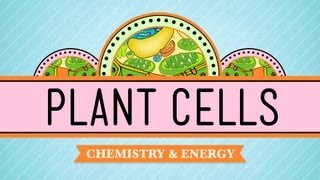
Plant Cells: Crash Course Biology #6 - Note
1. Summary
This Crash Course Biology video explains the fascinating nature of plant cells, highlighting their unique characteristics that distinguish them from animal cells. The video covers plant evolution, the structure of plant cells, including the cell wall, nucleus, plastids (specifically chloroplasts), and central vacuole, and the functions of each component. It also emphasizes the importance of photosynthesis and the ability of plants to produce their own food.
2. Key Takeaways
* **Plant Evolution:** Plants evolved over 500 million years ago, originating from green algae.
* **Cell Wall:** Plant cells have a rigid cell wall made of cellulose and lignin, providing structure and protection.
* **Eukaryotic Nature:** Plant cells are eukaryotic, meaning they have a nucleus and membrane-bound organelles.
* **Plastids & Chloroplasts:** Plastids, particularly chloroplasts, are organelles responsible for photosynthesis.
* **Central Vacuole:** Plant cells have a large central vacuole for water storage and maintaining turgor pressure.
* **Photosynthesis:** Plants make their own food through photosynthesis, converting sunlight, carbon dioxide, and water into sugar and oxygen.
* **Key Differences:** Plant cells differ from animal cells due to their cell walls, plastids, and large central vacuoles.
3. Detailed Notes
#### 1. Introduction (0:00)
* Plants are amazing because they can convert CO2 into oxygen, which we breathe.
* Unlike animals, plants don't need prepared foods.
* Plants use sunlight and water to make their own food.
#### 2. Plant Evolution (0:56)
* Plants evolved over 500 million years ago.
* Early plants were lycophytes.
* Some lycophytes evolved into scale trees.
* The carboniferous period gets its name from the vast coal deposits formed by these plants.
* Angiosperms (flowering plants) emerged around 65 million years ago.
#### 3. Eukaryotic vs. Prokaryotic Cells (2:33)
* Plant and animal cells are both eukaryotic cells.
* Eukaryotic cells have a "good kernel" (nucleus).
* Prokaryotic cells are "before the kernel."
* Prokaryotes include bacteria and archaea.
* Eukaryotic cells have a separate, enclosed nucleus.
* Eukaryotic cells have organelles (specialized compartments).
#### 4. Cellulose and Lignin (3:58)
* Plant cells have a rigid cell wall.
* The cell wall is made of cellulose and lignin.
* Cellulose is the most common carbohydrate in nature.
* Cellulose is hard to digest.
* The cell wall provides structure.
* The cell wall helps protect the cell.
* Animals don't have cell walls.
* Lignin and cellulose are considered "roughage" for humans, since we can't digest them, but they are useful for some aspect of the digestive system.
* Lignin and cellulose can burn, and release energy.
#### 5. Plastids and Chloroplasts (7:05)
* Plant cells have plastids.
* Plastids make and store compounds the plant needs.
* Mitochondria and chloroplasts started as bacteria.
* Chloroplasts convert light energy from the sun into sugar and oxygen through photosynthesis.
* All the green parts of a plant contain cells filled with chloroplasts.
#### 6. Central Vacuole (8:10)
* Plant cells have a large central vacuole.
* The vacuole stores water, provides turgor pressure (rigidity), and helps maintain structure.
* The vacuole can also store other compounds and waste products.
* Some animal cells have vacuoles, but they are not as large.
#### 7. Summary of Plant Cell Anatomy (8:59)
* Cell wall made of cellulose (rigid).
* Nucleus in its own baggie (separate from other organelles).
* Plastids, including chloroplasts (awesome, green food-making machines).
* Central vacuole stores water, other stuff, and helps provide structure.
* These unique features allow plants to put food on our table and air in our lungs.
Related Summaries
![[캡컷PC]0015-복합클립만들기분리된영상 하나로 만들기](https://img.youtube.com/vi/qtUfil0xjCs/mqdefault.jpg)
Why this video matters
This video provides valuable insights into the topic. Our AI summary attempts to capture the core message, but for the full nuance and context, we highly recommend watching the original video from the creator.
Disclaimer: This content is an AI-generated summary of a public YouTube video. The views and opinions expressed in the original video belong to the content creator. YouTube Note is not affiliated with the video creator or YouTube.