Road Signs Classifications | Passing a Road Test
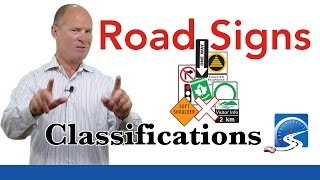
Road Signs Classifications - Smart Drive Test
Summary
This video from Smart Drive Test categorizes road signs into five main classifications: Regulatory, Caution/Advisory/Warning, Construction, Action Permitted/Not Permitted, and Destination & Service signs. Understanding these classifications is crucial for passing both learner's and on-road driving tests, as each type of sign conveys specific information that drivers must obey or be aware of for safety.
Key Takeaways
* Road signs are divided into broad classifications to help drivers understand their meaning and importance.
* **Regulatory Signs** are the most important as they represent the law and must be obeyed.
* **Caution/Advisory/Warning Signs** alert drivers to hazards, changes in road conditions, or obstructions.
* **Construction Signs** are particularly important during construction periods, often indicating reduced speed limits with increased penalties for violations.
* **Destination & Service Signs** provide information about routes and available services, often using shapes, colors, and symbols.
* Knowing all road sign classifications is essential for success on driving tests.
Detailed Notes
I. Introduction
* The video explains the different classifications of road signs.
* This knowledge is critical for passing learner's and on-road driving tests.
II. Road Sign Classifications
**A. Regulatory Signs**
* **Definition:** These signs are the most important and represent the law.
* **Requirement:** They *must* be obeyed.
* **Root Word:** "Regulatory" comes from "regulations."
**B. Caution, Advisory, or Warning Signs**
* **Purpose:** To warn drivers of potential hazards, changes to road conditions, or obstructions.
* **Examples:** These can include curves, slippery roads, pedestrian crossings, etc.
**C. Construction Signs**
* **Prominence:** Most common during warmer months (e.g., summer).
* **Key Features:**
* Often indicate **reduced speed limits** within construction zones.
* These reduced speed limits **must be obeyed**, especially during a road test.
* Fines are often **increased** in construction zones.
* **Note:** While not explicitly categorized as a separate classification in the initial list, the description implies they function similarly to warning/advisory signs but with a specific context of road work.
**D. Action Permitted & Action Not-Permitted Signs**
* **Note:** This classification is mentioned briefly as "another class" but not elaborated upon with specific examples or further details in the provided text. It implies signs that explicitly state what actions drivers can or cannot take.
**E. Destination & Service Signs**
* **Purpose:** To convey information about destinations and services available.
* **Communication Method:** These signs use shape, color, and/or symbols to convey their message.
* **Examples:** These would include signs for gas stations, restaurants, hospitals, rest areas, highway exit numbers, and directional signs to cities or towns.
III. Conclusion
* Understanding road sign classifications is vital for success on any driving test.
* Good luck on your road test!
Related Summaries
![[캡컷PC]0015-복합클립만들기분리된영상 하나로 만들기](https://img.youtube.com/vi/qtUfil0xjCs/mqdefault.jpg)

Why this video matters
This video provides valuable insights into the topic. Our AI summary attempts to capture the core message, but for the full nuance and context, we highly recommend watching the original video from the creator.
Disclaimer: This content is an AI-generated summary of a public YouTube video. The views and opinions expressed in the original video belong to the content creator. YouTube Note is not affiliated with the video creator or YouTube.