Structure and Function of the PLANT CELL explained (Organelles)
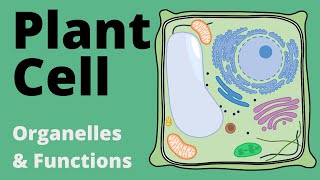
Plant Cell Structure and Function: Notes from Henrik's Lab
**Summary:** This video provides an overview of the structure and function of a plant cell, focusing on its various organelles. It highlights key differences between plant and animal cells, emphasizing the role of specific organelles in plant cell processes.
**Key Takeaways:**
* Plant cells are eukaryotic cells and the functional basic unit of plants.
* Key distinguishing features include a cell wall and chloroplasts.
* Each organelle within the plant cell has a specific structure and function.
* Photosynthesis occurs in chloroplasts, producing sugars and oxygen.
* The vacuole is a large, central organelle for maintaining turgor pressure and waste storage.
**Detailed Notes:**
**1. Introduction (0:00 - 0:33)**
* Plant cells are a type of eukaryotic cell.
* This video explores the components of a plant cell and their functions.
**2. Cell Wall (0:33 - 1:08)**
* **Structure:** Located outside the plasma membrane, providing support and determining cell shape.
* **Composition:** Primarily cellulose, with other polysaccharides and proteins.
* **Function:**
* Acts as a support skeleton.
* Protects against fungal infections.
* Withstands high osmotic pressure inside the cell.
**3. Plasma Membrane (1:08 - 1:28)**
* **Structure:** A selectively permeable lipid bilayer.
* **Function:**
* Regulates nutrient and mineral transport into and out of the cell.
**4. Cytoplasm (1:28 - 1:43)**
* **Definition:** The entire content within the plasma membrane, including the cytosol, cytoskeleton, and organelles.
**5. Nucleus (1:43 - 2:19)**
* **Function:**
* Stores the majority of the cell's genetic information (DNA).
* Site of DNA replication and transcription (RNA synthesis).
* **Nucleolus:**
* Located inside the nucleus.
* Responsible for ribosome production and assembly.
**6. Endoplasmic Reticulum (ER) (2:19 - 2:35)**
* **Structure:** A network of membranes connected to the nuclear membrane.
* Rough ER: Studded with ribosomes.
* Smooth ER: Lacks ribosomes.
* **Function:**
* Rough ER: Protein synthesis, modification, and preparation for transport.
* Smooth ER: Lipid synthesis and further protein modification.
**7. Ribosomes (2:35 - 3:01)**
* **Location:** Free in the cytoplasm and on the rough ER.
* **Function:** Protein synthesis.
**8. Golgi Apparatus (3:01 - 3:28)**
* **Function:**
* Receives proteins from the rough ER.
* Sorts, packages, and sends proteins to their destinations.
* Protein modification (e.g., glycosylation).
* Synthesis of polysaccharides for the cell wall.
**9. Chloroplasts (3:28 - 3:56)**
* **Function:** Site of photosynthesis.
* Uses sunlight, water, and carbon dioxide to produce sugars and oxygen.
**10. Amyloplasts (3:56 - 4:07)**
* **Function:** Storage of starch.
**11. Mitochondria (4:07 - 4:18)**
* **Function:** Powerhouse of the cell; produces energy (ATP) through cellular respiration.
**12. Peroxisomes (4:18 - 4:32)**
* **Function:**
* Accumulate and degrade peroxides (e.g., hydrogen peroxide).
**13. Vacuole (4:32 - 5:04)**
* **Structure:** Large, permanent structure; water-filled; surrounded by the tonoplast membrane.
* **Function:**
* Maintains turgor pressure (internal pressure).
* Contributes to cell stability.
* Acts as a "trash can" for waste digestion.
**14. Cytoskeleton (5:04 - 5:26)**
* **Composition:** Microtubules and actin filaments.
* **Function:**
* Maintains cell shape.
* Organizes and facilitates movement of organelles.
Related Summaries
![[캡컷PC]0015-복합클립만들기분리된영상 하나로 만들기](https://img.youtube.com/vi/qtUfil0xjCs/mqdefault.jpg)

Why this video matters
This video provides valuable insights into the topic. Our AI summary attempts to capture the core message, but for the full nuance and context, we highly recommend watching the original video from the creator.
Disclaimer: This content is an AI-generated summary of a public YouTube video. The views and opinions expressed in the original video belong to the content creator. YouTube Note is not affiliated with the video creator or YouTube.