Truth About Making Money in India - Attention, Branding & 2026 Strategy | Rajiv | FO457 Raj Shamani
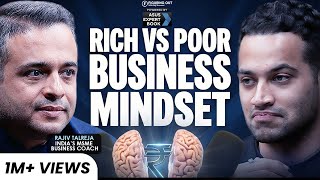
Truth About Making Money in India - Attention, Branding & 2026 Strategy | Rajiv | FO457 Raj Shamani
1. Summary
This episode of Figuring Out features Rajiv Talreja, a prominent Indian MSME Business Coach, discussing the crucial aspects of building and sustaining a business in India. The conversation emphasizes that while starting a business is relatively easy, achieving long-term success requires strategic focus on customer identification and selection, understanding customer willingness to pay, establishing healthy profit margins, effective marketing and branding, and building robust systems and teams. Rajiv highlights the importance of moving beyond intellectual arrogance and embracing change, particularly in the digital age where content creation and brand building are no longer optional. The discussion also touches upon the common pitfalls of targeting the wrong customers and the concept of decision-making fatigue.
2. Key Takeaways
* **Customer Focus is Paramount:** Identifying and choosing the *right* customers is more critical than just acquiring any customer.
* **Understanding Willingness to Pay:** Businesses must deeply understand what customers are genuinely willing to spend, which is often tied to perceived value.
* **Healthy Margins are Essential:** Determining and maintaining good profit margins is vital for business sustainability and growth.
* **Marketing and Branding are Non-Negotiable:** In today's landscape, content creation and brand building are essential for scaling and reaching the right audience.
* **Systems and Teams Drive Growth:** Sustainable growth requires building effective systems and a strong team that can operate the business efficiently.
* **Overcome Resistance to Change:** Intellectual arrogance and resistance to adopting new strategies (especially in marketing and digital presence) can be detrimental.
* **Perceived Value Drives Decisions:** Customers make purchasing decisions based on the perceived value of a product or service, not just its cost.
* **Decision-Making Fatigue is Real:** Founders can suffer from this, impacting their ability to make optimal business choices.
3. Detailed Notes
I. The Business Game in India
* **Starting is Easy, Sustaining is Hard:** The core challenge in Indian business lies in long-term viability and growth.
* **Focus on the "Right" Elements:** Success hinges on understanding core business principles rather than just chasing superficial metrics.
II. Customer Identification and Selection
* **Identifying Top Customers:**
* What makes them your top customers? (e.g., spend threshold, loyalty, referral potential).
* Understanding their buying behavior and what they value.
* **Choosing Better Customers:**
* It's not about acquiring everyone; it's about acquiring the *right* ones.
* Avoid customers who are "time vampires" or drain resources without providing proportionate value.
* **Spend Threshold & Targeting the Wrong Customers:**
* Many businesses fail by targeting customers with a low spend threshold who cannot afford their offerings.
* This leads to a constant struggle to acquire and retain customers.
* **Example:** Selling a premium product to someone who can only afford a budget option will lead to dissatisfaction and churn.
* **What the Customer Is Willing to Spend:**
* This is crucial for pricing strategy.
* Customers pay for perceived value, not necessarily for the cost of production.
* **Key Question:** What problem are you solving for them, and how much is that solution worth to them?
III. Profitability and Pricing Strategy
* **Decision-Making Fatigue:** Founders can get overwhelmed and make poor decisions, especially regarding customer acquisition and pricing.
* **How Much Margin Is a Good Margin?**
* There's no universal answer, but a healthy margin is one that allows for reinvestment, growth, and weathering economic downturns.
* It should reflect the value delivered and the cost of doing business.
* Low margins lead to vulnerability.
IV. Marketing
* **The Evolution of Marketing:** What worked yesterday might not work today, especially with the rise of digital platforms.
* **Three Fundamentals of Marketing:**
1. **Attention:** Getting noticed in a crowded space.
2. **Branding:** Creating a recognizable and trusted identity.
3. **Customer Acquisition:** Effectively converting attention and brand perception into paying customers.
* **Content Creation is Key:** It's no longer optional for brand building and customer engagement.
* **Clarity in Marketing and Sales:** Leads to predictable scaling.
V. Brand Building
* **Beyond Logos and Slogans:** True brand building is about creating an experience, a perception, and a trust factor.
* **The Importance of Being Seen:** Consistent presence and relevant messaging are vital.
* **Resistance to Change & Intellectual Arrogance:**
* Many entrepreneurs are resistant to adopting new marketing or branding strategies, often due to pride or a belief that their current methods are sufficient.
* This can be a major barrier to growth.
* **Mindset Shift:** Be open to learning and adapting, especially in areas like digital presence and content creation.
VI. Sales Mindset
* **The Art of Selling:** Understanding customer needs and presenting solutions effectively.
* **Focus on Value, Not Just Price:** Highlight the benefits and the problem-solving capacity of your offering.
* **Building Relationships:** Strong sales are often built on trust and long-term relationships.
VII. System and Team Building
* **Scalability Requires Systems:** Businesses cannot grow exponentially without well-defined processes and systems.
* **The Right Team:** Hiring, training, and empowering the right people is crucial for executing business strategies.
* **Empowerment:** Letting your team take ownership and make decisions within their roles.
VIII. Future Outlook (Mentioned in Title contextually)
* The discussion implicitly points towards adapting for future growth, with a potential nod to the 2026 strategy, suggesting a need for forward-thinking and agility in business planning.
---
**Note:** This structured note is based on the provided video information, including the title, description, and timestamps. The content is organized to provide a comprehensive overview of the discussion.
Related Summaries
![[캡컷PC]0015-복합클립만들기분리된영상 하나로 만들기](https://img.youtube.com/vi/qtUfil0xjCs/mqdefault.jpg)

Why this video matters
This video provides valuable insights into the topic. Our AI summary attempts to capture the core message, but for the full nuance and context, we highly recommend watching the original video from the creator.
Disclaimer: This content is an AI-generated summary of a public YouTube video. The views and opinions expressed in the original video belong to the content creator. YouTube Note is not affiliated with the video creator or YouTube.