Week 1 : Lecture 2 : Evidences from the field
Week 1: Lecture 2: Evidences from the field - Summary Notes
**1. Summary:**
This lecture discusses the importance of proper infant growth monitoring, using WHO growth charts, and the impact of breastfeeding techniques and complementary feeding on child development. The speaker emphasizes the need for early intervention, particularly focusing on breastfeeding support and protein-rich complementary foods to combat malnutrition and promote healthy growth in children. The lecture highlights data from various projects in urban slums and districts in Gujarat, showcasing the positive impact of interventions focused on improving breastfeeding practices and addressing childhood malnutrition.
**2. Key Takeaways:**
* **Importance of Growth Charts:** Pediatricians use height/length and weight charts to monitor child growth and identify potential issues like malnutrition or obesity.
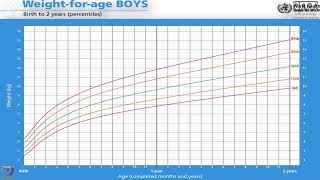
* **WHO Growth Charts:** These charts are standard references for assessing a child's growth percentile (e.g., weight-for-age, length-for-age).
* **Breastfeeding is Key:** Proper breastfeeding technique significantly improves milk transfer and promotes healthy growth, including weight and length gain.
* **Early Intervention is Crucial:** Interventions, particularly focused on breastfeeding support, are most effective when implemented early in a child's life (within the first two months).
* **Complementary Feeding is Essential:** Introducing the right foods (particularly protein-rich) at 6 months of age is critical for continued growth and development.
* **Data-Driven Results:** The speaker presents data from projects in urban slums and districts in Gujarat, demonstrating significant improvements in reducing malnutrition, stunting, and underweight prevalence through interventions focused on breastfeeding support.
* **Addressing Stunting:** Interventions can lead to a significant reduction in stunting levels within a year of intervention.
**3. Detailed Notes:**
* **Introduction:**
* The lecture focuses on evidences from the field.
* Discussing growth charts and how children grow, with a focus on underweight and stunting.
* Sharing success stories and data from the field.
* **Growth Charts and Monitoring:**
* Pediatricians plot children's height/length and weight on charts.
* *Length for Age* chart for children under 2 years.
* *Height for Age* chart for children over 2 years.
* WHO growth charts are used as a standard reference.
* Charts have percentiles, weight for age for a girl child example.
* 50th percentile is the average.
* Target is to bring children to at least 50th percentile.
* **Impact of Breastfeeding:**
* Good milk transfer results in better growth in weight and height.
* Proper breastfeeding technique is crucial.
* Importance of teaching proper breastfeeding techniques to the mothers.
* **Case Studies and Examples:**
* **Weight vs. Age Plot:**
* Weight gain per month in first three months.
* A 3-month-old child example is given, showing growth.
* Example of breastfed babies who are on a 97 percentile
* Breastfed babies, protected from obesity, infections, and other diseases.
* India has a high rate of stunted children.
* Showing chart example where the length of a child in the 97th percentile.
* If a child gets good nutrition and doesn't get childhood illnesses, the child will be tall.
* Lancet article saying Indian girls height has increased.
* The video emphasizes that the short height of Indian people has to do with the nutrition level in first 6 months.
* **Example of 6-month-old baby boy:**
* Weight, the baby is on a 97 percentile for age.
* **Charts showing Weight, Length and Z Score**.
* **Field Data and Projects (286 Children):**
* *Results from a project in urban slums of Mumbai:*
* Weight and Height is affected by the level of nutrition.
* Early intervention is important.
* If a child is not getting the proper amount of food.
* *Results:*
* Severe wasting reduced by 66.7% (SAM).
* Overall wasting reduced by 16.7%.
* Underweight decreased by 50%.
* Stunting reduction was remarkable.
* Government plans to decrease stunting, and the intervention has the potential.
* There are more underweight children due to nutritional deficiency.
* There is an increase in wasting.
* Boys, girls there are wasting problems.
* The children’s growth were evaluated in terms of their height
* Giving them more fat rather than carbohydrates.
* **Data from Banaskantha District:**
* Comparing NFHS 4 vs. NFHS 5 data.
* Reduction in first hour breastfeeding from 49.6% to 47.9%.
* Exclusive breastfeeding increased from 47% to 57.5%.
* There was no stunting changes.
* **Healthcare Worker Training (2016-2019):**
* Focusing on interventions.
* The children were breastfed at birth.
* There was some improvement in iycf.
* Had implemented the Latching project, just by focusing on latching.
* In Sabarkantha, there was 13.6% reduction of stunting.
* **Conclusion:**
* Emphasizes the importance of focus on breastfeeding techniques and complementary foods.
* Focusing on what has worked and what did not.
* Focus on the framework, in the next presentation.
Related Summaries
![[캡컷PC]0015-복합클립만들기분리된영상 하나로 만들기](https://img.youtube.com/vi/qtUfil0xjCs/mqdefault.jpg)

Why this video matters
This video provides valuable insights into the topic. Our AI summary attempts to capture the core message, but for the full nuance and context, we highly recommend watching the original video from the creator.
Disclaimer: This content is an AI-generated summary of a public YouTube video. The views and opinions expressed in the original video belong to the content creator. YouTube Note is not affiliated with the video creator or YouTube.