Week 1 : Lecture 2 : Evidences from the field
Video Notes: Week 1 : Lecture 2 : Evidences from the Field
**Channel:** NPTEL IIT Bombay
**Video Title:** Week 1 : Lecture 2 : Evidences from the field
1. Summary:
This lecture focuses on providing evidence from field studies to showcase the importance of proper infant feeding practices, particularly breastfeeding techniques, and their impact on child growth. The speaker emphasizes the use of WHO growth charts to monitor child development and presents data from various projects in urban slums and districts in Gujarat, highlighting the positive effects of interventions like breastfeeding education on reducing malnutrition and stunting. The importance of early intervention (during pregnancy and shortly after birth) is stressed for optimal growth outcomes. The speaker also touches on the issues of providing carbohydrates and protein for infants as it can lead to metabolic diseases.
2. Key Takeaways:
* **Importance of Breastfeeding:** Correct breastfeeding techniques are crucial for optimal milk transfer and child growth.
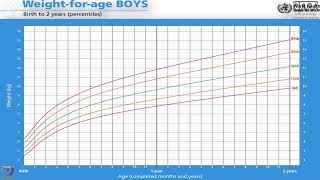
* **WHO Growth Charts:** Essential for monitoring child growth (weight, height/length) and identifying malnutrition.
* **Early Intervention is Key:** Interventions (like breastfeeding education) during pregnancy and immediately after birth yield the best results.
* **Success Stories:** Breastfeeding education and proper technique significantly improve weight gain, and length, and overall health.
* **Data from Field Studies:** Projects in urban slums and districts demonstrate positive impacts of breastfeeding support on reducing malnutrition, wasting and stunting.
* **Emphasis on Nutrition:** The speaker highlights the importance of the kind of nutrients to be included in infants diet to prevent diseases.
* **Stunting Reduction:** A substantial reduction in stunting (18%) and other forms of malnutrition (severe wasting) can be achieved through targeted interventions.
3. Detailed Notes:
**I. Introduction (0:00:16 - 0:00:28):**
* The lecture will discuss growth charts, child growth, standard reference curves, and success stories.
**II. Understanding Growth and WHO Charts (0:01:23 - 0:03:05):**
* Paediatricians plot height and weight on growth charts.
* For infants under 2 years old, they use length-for-age charts.
* For children older than 2 years, they use height-for-age charts.
* WHO growth charts are standard references.
* Illustrates the 50th percentile as an average growth target.
* Goal is to improve the children growth who is underweight and malnourished.
**III. Breastfeeding and Its Impact (0:03:21 - 0:03:35):**
* Proper breastfeeding techniques result in significant growth in weight and length.
**IV. Weight Monitoring & Growth Charts (0:03:36 - 0:04:12):**
* Example: a child who is 3 months old weight is monitored on a chart.
* Mothers, families, and healthcare workers must plot growth charts.
* Emphasizes the rapid weight gain in the first three months.
**V. Impact of Early Intervention (0:04:13 - 0:04:56):**
* Underweight is a primary issue.
* Importance of growth in the first three months to improve health and weight.
* Highlighting the chart showing how the baby growth is measured.
**VI. Case Study: Breastfed Baby (0:05:00 - 0:06:12):**
* Shows a baby's length and weight are being monitored.
* Baby’s growth is at 97th percentile, and it is completely fine in breastfeed baby.
* Formula feed and cow milk have a chance of causing more obesity and undernutrition.
**VII. Addressing Malnutrition in India (0:07:08 - 0:07:39):**
* Highlights the issue of the fact that 36% of the children in India are below the third percentile.
* Discusses the need to correct the issue of small, stunted children in India.
* Good nutrition is crucial for children to have better growth.
**VIII. Case Study: Impact of Breastfeeding (0:07:40 - 0:10:36):**
* Illustrates the growth of a girl child.
* Reviews research on the average height of woman and men in India.
* 6 months old baby child is having 10 kg weight.
* The boys growth chart is reviewed, and showing above 50 percentile.
**IX. Importance of Nutrition After 6 Months (0:10:39 - 0:12:01):**
* Weight gain after 6 months depends on appropriate food.
* Muscle melting can occur without proper complementary food, leading to leanness.
* Mothers should know which food to start with for child.
**X. Target Weight Gain and WHO Tables (0:12:02 - 0:13:39):**
* Focus on protein rich diet.
* Illustrates WHO tables for the male child.
* Boys and girls both can grow equally.
**XI. Weight Gain Targets (0:13:39 - 0:15:40):**
* The average weight gain in the first week should be 200 g.
* Highlights that proper breastfeeding technique improves weight gain.
* Emphasizes the need for breastfeeding technique training.
* Target weight gain for 4 weeks should be 1.1 kg.
* Shows the target weight gain per day and per week.
**XII. Importance of Early Intervention for Low Birth Weight Babies (0:15:40 - 0:16:26):**
* Illustrates the need for more training on low birth weight babies.
* Highlights the technique of breastfeeding
* Reviews the importance of proper breastfeeding techniques to get good weight in children.
**XIII. Field Data: Urban Slums in Mumbai (0:16:26 - 0:18:20):**
* Data from projects in urban slums of Orissa.
* Discusses the effect of SAM and MAM malnutrition on the children.
* Highlights the effect of the children with proper intervention.
**XIV. Field Data: Urban Slums in Mumbai (0:19:26 - 0:20:57):**
* Baby's weight was decreasing.
* Importance of breastfeeding technique.
* Showcasing the data of the 2 weeks catch-up growth in children
**XV. Case Study: Sabarakantha District Study (0:20:57 - 0:21:19):**
* Discusses the chart for children in urban slums of Mumbai.
* Illustrates the point of weight, length for age.
* How the child's growth has been occurred.
**XVI. Impact of Healthcare Worker Training (0:21:21 - 0:26:00):**
* It's important to look at wasting in a holistic way.
* Emphasizes the need for more protein.
* Discusses that government plan is to decrease stunting to 4 percent, but they had a result of 12 points.
**XVII. Data from Banaskantha District (0:26:00 - 0:26:38):**
* There was a reduction of stunting by 13.6% in NFHS 5 data.
* There was a reduction of stunting in Sabarkantha
* The benefits of just proper latching.
**XVIII. Conclusion (0:26:38 - 0:29:51):**
* Underweight is a main concern in the non-intervention group.
* In the intervention group, the girls growth faltering was there.
* Underweight prevalence in moderate has been addressed.
* The growth faltering for underweight in boys and girls
**XIX. Further Discussions (0:29:51 - 0:30:11):**
* Showcasing the data from 6 weeks visit.
* The children are becoming more wasted in non-intervention group.
**XX. Government Initiatives (0:30:11 - 0:32:00):**
* In non-intervention group, just the standard of care.
* Showcasing and giving the examples of proper technique for mothers.
* Weekly basis checkup of babies till six months of age.
**XXI. Impact of Training (0:32:00 - 0:32:18):**
* There was a lot of training done in healthcare workers from 2016-2019.
* Showcasing the impact of IYCF.
**XXII. Concluding Remarks (0:32:18 - 0:42:44):**
* The speaker gives a summary of the lecture.
* Highlights the healthy babies pictures.
* There will be a discussion on how the children grows.
* There are different kind of children from different backgrounds.
* There are results coming in NHFS6, and that is for Gujarat.
* In the next session, there will be discussion on framework.
Related Summaries
![[캡컷PC]0015-복합클립만들기분리된영상 하나로 만들기](https://img.youtube.com/vi/qtUfil0xjCs/mqdefault.jpg)

Why this video matters
This video provides valuable insights into the topic. Our AI summary attempts to capture the core message, but for the full nuance and context, we highly recommend watching the original video from the creator.
Disclaimer: This content is an AI-generated summary of a public YouTube video. The views and opinions expressed in the original video belong to the content creator. YouTube Note is not affiliated with the video creator or YouTube.